


Table of Contents
Cruciferous vegetables including broccoli, cauliflower, cabbage, kale, and Brussels sprouts are nutrient-dense vegetables that provide dietary fiber, vitamins, minerals, and naturally occurring plant compounds. According to major health authorities, including a variety of these vegetables as part of a balanced diet contributes to a healthy dietary pattern.
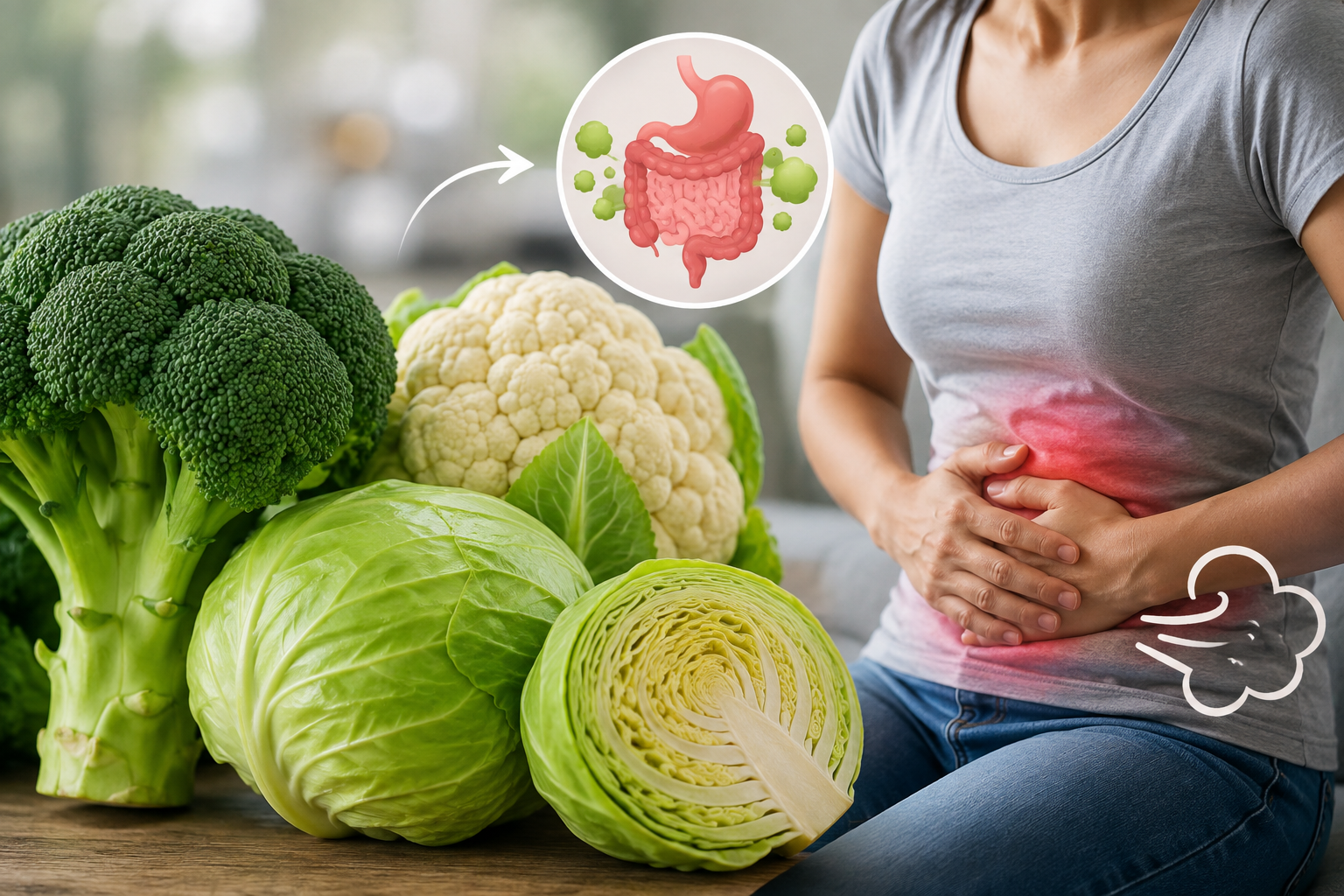
Although most people tolerate cruciferous vegetables well, some experience gas, bloating, or abdominal discomfort after eating them. These symptoms often lead to the question: Are cruciferous vegetables actually hard to digest?
The short answer is not usually. Scientific evidence suggests that digestive symptoms typically result from the fermentation of fiber and carbohydrates by gut bacteria, not from poor digestion of vegetables. Individual factors like sensitivity, portion size, and preparation can also affect tolerance.
In this article, we’ll examine what current research says about cruciferous vegetables and digestion, why some people experience digestive symptoms, who is more likely to be affected, and practical ways to improve tolerance while continuing to benefit from these nutritious vegetables.
Are Cruciferous Vegetables Actually Hard to Digest?
Although cruciferous vegetables are often described as “hard to digest,” current scientific evidence suggests that this is not the best way to understand why they cause digestive symptoms in some people. The Monash University FODMAP Program explains that digestive symptoms associated with these vegetables are usually caused by normal fermentation in the large intestine rather than an inability to digest the vegetables themselves.
Cruciferous vegetables contain dietary fiber and naturally occurring carbohydrates, including raffinose. Scientific research has shown that humans lack the enzyme α-galactosidase, which is needed to fully digest raffinose in the small intestine. As a result, fiber and raffinose reach the colon, where beneficial gut bacteria ferment them. The National Institute of Diabetes and Digestive and Kidney Diseases (NIDDK) explains that this normal digestive process produces gases such as hydrogen, methane, and carbon dioxide, which may cause bloating, flatulence, or abdominal discomfort in some people.
Not everyone responds to cruciferous vegetables in the same way. The American College of Gastroenterology (ACG) notes that people with irritable bowel syndrome (IBS) are more likely to experience digestive symptoms after consuming fermentable carbohydrates. Similarly, the Monash University FODMAP Program recognizes that individuals with sensitive digestion may be more susceptible to gas and bloating from certain cruciferous vegetables. For most healthy adults, however, cruciferous vegetables are well tolerated and can be enjoyed as part of a balanced diet.
Why Can Cruciferous Vegetables Cause Digestive Symptoms?
Digestive symptoms after eating cruciferous vegetables are primarily caused by normal fermentation in the large intestine rather than poor digestion. The Monash University FODMAP Program explains that two natural components of these vegetables play the biggest role: dietary fiber and raffinose.
Dietary Fiber
Cruciferous vegetables are naturally rich in dietary fiber. The National Institute of Diabetes and Digestive and Kidney Diseases (NIDDK) explains that dietary fiber is not digested by human digestive enzymes. Instead, it passes into the large intestine, where beneficial gut bacteria ferment it. While this process supports gut health, it also naturally produces gas, particularly if you suddenly increase your fiber intake.
Raffinose
Cruciferous vegetables also contain raffinose, a naturally occurring carbohydrate found in many plant foods. Scientific research has shown that humans lack the enzyme α-galactosidase, which is required to fully digest raffinose in the small intestine. As a result, raffinose reaches the colon, where gut bacteria ferment it and produce gases such as hydrogen, methane, and carbon dioxide. The Monash University FODMAP Program identifies raffinose as one of the fermentable carbohydrates that can contribute to bloating, flatulence, and abdominal discomfort, particularly in sensitive individuals.
Although these digestive symptoms can be uncomfortable, the NIDDK explains that gas production during fermentation is a normal part of healthy digestion and is not usually a sign that cruciferous vegetables are harmful or inherently difficult to digest.
Who Is More Likely to Experience Digestive Symptoms?
Not everyone responds to cruciferous vegetables in the same way. Current scientific evidence from medical and nutrition sources indicate that several factors can influence how well these vegetables are tolerated.
You may be more likely to experience gas, bloating, or abdominal discomfort if you:
- Have irritable bowel syndrome (IBS). People with IBS are often more sensitive to fermentable carbohydrates (FODMAPs), making digestive symptoms more likely after eating certain cruciferous vegetables.
- Have a sensitive digestive system. Even without IBS, some individuals naturally experience more gas or bloating than others.
- Recently increased your fiber intake. A sudden increase in dietary fiber can temporarily increase gas production as the digestive system adapts.
- Eat large portions. Larger servings provide more fiber and fermentable carbohydrates, increasing the likelihood of digestive symptoms.
- Prefer raw vegetables. Raw cruciferous vegetables are often less well tolerated than cooked ones because cooking softens plant tissues and may improve digestibility for some people.
These factors affect tolerance, not whether cruciferous vegetables are healthy. Most people can continue to enjoy these vegetables by adjusting portion sizes, preparation methods, or gradually increasing their intake.
How to Make Cruciferous Vegetables Easier to Digest
Digestive discomfort doesn’t necessarily mean you need to stop eating cruciferous vegetables. Several practical strategies may help improve tolerance while allowing you to continue enjoying their nutritional benefits.
- Increase your intake gradually. The National Institute of Diabetes and Digestive and Kidney Diseases (NIDDK) recommends increasing dietary fiber gradually so the digestive system has time to adapt.
- Choose cooked instead of raw vegetables. The Monash University FODMAP Program notes that many people tolerate cooked cruciferous vegetables better than raw ones.
- Start with smaller portions. Moderate servings may reduce gas and bloating, particularly if you’re sensitive to fermentable carbohydrates.
- Chew your food thoroughly. Thorough chewing breaks food into smaller pieces before it reaches the stomach and intestines, supporting normal digestion.
- Monitor your individual tolerance. Some people tolerate certain cruciferous vegetables better than others. Keeping track of which vegetables and portion sizes work best for you can help reduce digestive symptoms.
If symptoms are persistent, severe, or significantly affect your quality of life, the American College of Gastroenterology (ACG) recommends seeking medical evaluation rather than eliminating an entire group of nutrient-rich vegetables without professional guidance.
Should You Avoid Eating Cruciferous Vegetables?
For most people, the answer is no. The Dietary Guidelines for Americans recommend eating a variety of vegetables, including cruciferous vegetables, as part of a healthy dietary pattern. Occasional gas or bloating after eating these vegetables does not usually mean they should be eliminated from the diet.
Cruciferous vegetables are rich in dietary fiber, vitamins, minerals, and naturally occurring plant compounds that support overall health. The National Cancer Institute (NCI) notes that these vegetables contain glucosinolates, compounds that have been widely studied for their potential health benefits. In many cases, digestive symptoms can be managed by adjusting portion sizes, choosing cooked rather than raw vegetables, or increasing fiber intake gradually instead of avoiding these vegetables altogether.
People with irritable bowel syndrome (IBS) or other digestive conditions, however, may benefit from a more individualized approach. The American College of Gastroenterology (ACG) recommends identifying personal food triggers rather than unnecessarily eliminating entire food groups, while the Monash University FODMAP Program emphasizes that tolerance often depends on the type of vegetable and the portion consumed.
Unless advised otherwise by a healthcare professional, temporary digestive discomfort alone is not usually a reason for healthy adults to avoid this nutritious group of vegetables.
When Should You See a Doctor?
Occasional gas or bloating after eating cruciferous vegetables is common and is usually not a cause for concern. However, if your digestive symptoms are persistent, severe, or accompanied by other concerning signs, it’s important to consult a healthcare professional.
Seek medical advice if you experience:
- Persistent or worsening abdominal pain
- Ongoing bloating or excessive gas that does not improve with dietary changes
- Blood in the stool
- Unexplained weight loss
- Persistent diarrhea or constipation
- Difficulty swallowing or other concerning digestive symptoms
These symptoms may not be related to cruciferous vegetables and could indicate an underlying digestive condition that requires medical evaluation. A healthcare professional can determine the cause of your symptoms and recommend the most appropriate dietary changes, further testing, or treatment if needed.
Key Takeaways :
- Cruciferous vegetables are not inherently hard to digest. Gas and bloating are usually caused by normal fermentation in the large intestine rather than poor digestion.
- Dietary fiber and raffinose are the main components that contribute to gas and bloating in some people.
- Tolerance varies from person to person. People with IBS, sensitive digestion, or those who suddenly increase their fiber intake are more likely to experience digestive symptoms.
- Simple dietary changes such as eating smaller portions, choosing cooked instead of raw vegetables, and gradually increasing fiber intake can often improve tolerance.
- For most healthy adults, the health benefits of cruciferous vegetables outweigh temporary digestive discomfort, making them a valuable part of a balanced diet.
- Persistent, severe, or unusual symptoms should be evaluated by a healthcare professional, as they may indicate an underlying digestive condition rather than a problem with cruciferous vegetables.
References :
- Dietary Guidelines for Americans, 2020–2025. U.S. Departments of Agriculture and Health and Human Services.
USDA FoodData Central. U.S. Department of Agriculture. - National Cancer Institute (NCI). Cruciferous Vegetables and Cancer Prevention.
- Monash University FODMAP Program. About FODMAP and IBS.
- National Institute of Diabetes and Digestive and Kidney Diseases (NIDDK). Eating, Diet, & Nutrition for Irritable Bowel Syndrome.
- American College of Gastroenterology (ACG). Management of Irritable Bowel Syndrome.
FAQs
1. Are cruciferous vegetables actually hard to digest?
Not usually. Although they are often described as “hard to digest,” digestive symptoms are generally caused by normal fermentation in the large intestine rather than poor digestion. Their fiber and naturally occurring carbohydrates, such as raffinose, are fermented by beneficial gut bacteria, which can produce gas and bloating in some people.
2. Which cruciferous vegetables are most likely to cause gas?
Broccoli, cauliflower, cabbage, Brussels sprouts, kale, and Brussels sprouts are among the cruciferous vegetables most commonly associated with gas. However, tolerance varies from person to person, and preparation methods and portion sizes can make a significant difference.
3. Why do cruciferous vegetables cause bloating?
Cruciferous vegetables contain dietary fiber and raffinose, a carbohydrate that humans cannot fully digest in the small intestine. When these components reach the colon, beneficial gut bacteria ferment them, producing gases that may lead to bloating, flatulence, or abdominal discomfort.
4. Are cooked cruciferous vegetables easier to digest than raw ones?
For many people, yes. Cooking softens plant tissues and may improve tolerance, making cooked cruciferous vegetables less likely to cause digestive discomfort than raw ones.
5. Can people with IBS eat cruciferous vegetables?
Many people with IBS can still enjoy cruciferous vegetables, but their tolerance varies. Some cruciferous vegetables contain higher amounts of fermentable carbohydrates (FODMAPs), which may trigger symptoms in sensitive individuals. Choosing appropriate portion sizes and identifying personal trigger foods is often more helpful than avoiding all cruciferous vegetables.
6. Should I stop eating cruciferous vegetables if they cause gas?
Not usually. Occasional gas or bloating is a normal response to fermentation and is not generally a reason to eliminate these nutrient-rich vegetables. Simple strategies such as eating smaller portions, choosing cooked vegetables, and gradually increasing fiber intake often improve tolerance.
7. How can I make cruciferous vegetables easier to digest?
You may improve tolerance by:
- increasing your fiber intake gradually,
- choosing cooked instead of raw vegetables,
- eating smaller portions,
- chewing your food thoroughly, and
- identifying which vegetables and serving sizes work best for you.
8. When should I see a doctor about digestive symptoms?
Occasional gas or bloating is common. However, you should consult a healthcare professional if you experience persistent or severe abdominal pain, unexplained weight loss, blood in the stool, persistent diarrhea or constipation, difficulty swallowing, or digestive symptoms that do not improve with dietary changes.