


Table of Contents
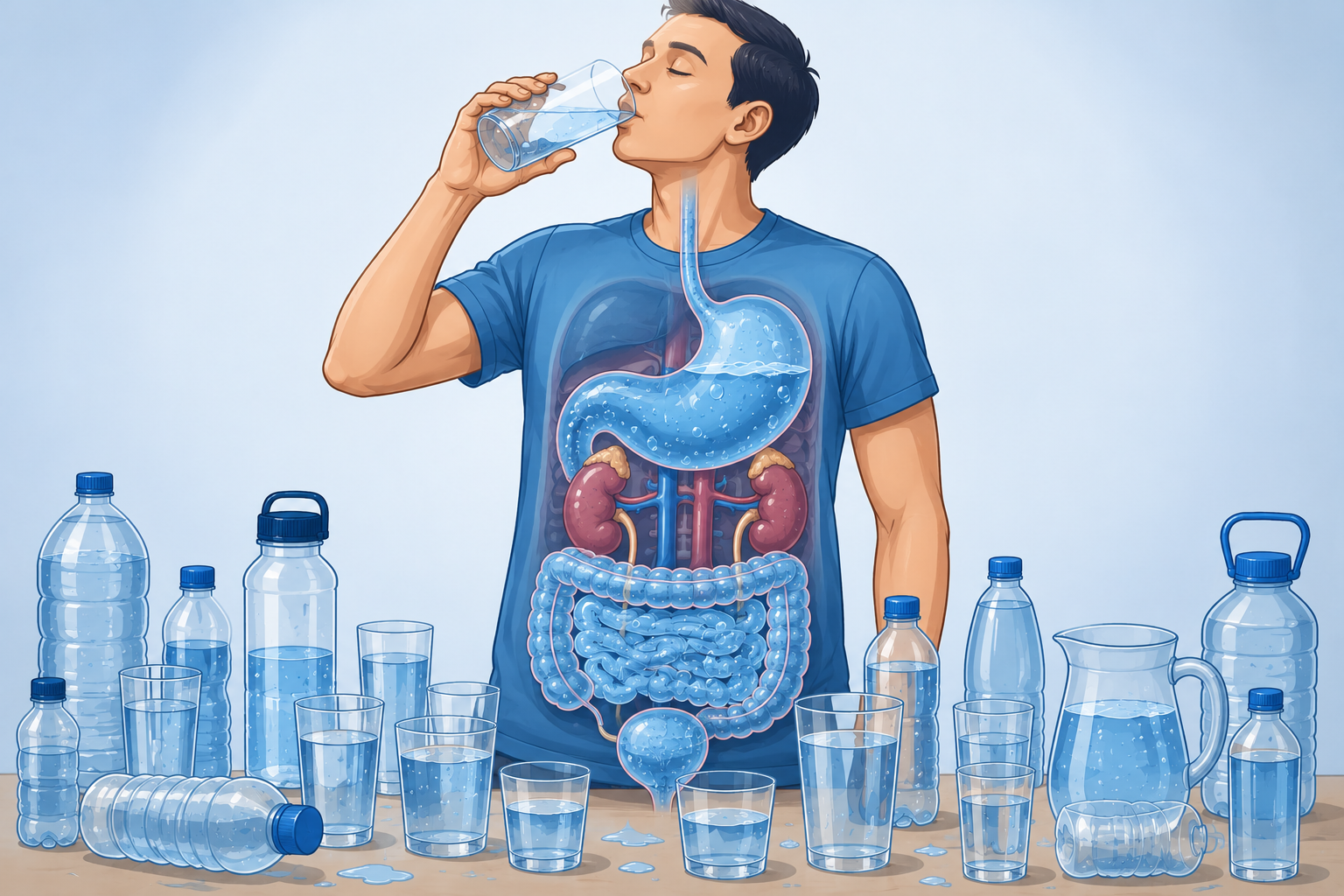
You’ve probably heard conflicting advice about how much water you should drink. Maybe you’ve been told to drink eight glasses a day, carry a water bottle wherever you go, or keep sipping water even when you don’t feel thirsty.
But do you really need to?
Should you drink water even if you’re not thirsty?
Is thirst already a sign that you’re dehydrated?
And does drinking more water always mean better health?
These are common questions, and the answers aren’t always as straightforward as popular hydration advice suggests.
Water is essential for life. It helps regulate body temperature, transport nutrients, support digestion, remove waste, lubricate joints, and support many other vital functions. However, for most healthy adults, current scientific evidence suggests that staying hydrated doesn’t mean forcing yourself to drink water throughout the day. Your body’s thirst mechanism is generally an effective way to regulate fluid intake, and routinely drinking more water than your body needs hasn’t been shown to provide additional health benefits for most healthy people.
That said, thirst isn’t the whole story. Fluid needs can change depending on your age, physical activity, climate, pregnancy, breastfeeding, illness, and certain medical conditions. In this guide, we’ll examine what current scientific evidence says about hydration, separate common myths from established facts, and help you make informed decisions about when to drink, how much to drink, and when your body may need more fluids than usual.
Should You Drink Water Even If You’re Not Thirsty?
For most healthy adults, probably not.
Your body is remarkably good at regulating its water balance. According to the National Academies of Sciences, Engineering, and Medicine (NASEM), healthy adults generally maintain proper hydration through normal physiological mechanisms, including thirst. In other words, your body is designed to let you know when it needs more fluids.
That’s why most experts no longer recommend drinking water on a rigid schedule or aiming for a fixed number of glasses each day. For most people, drinking more water than the body needs hasn’t been shown to provide additional health benefits. The goal isn’t to drink as much water as possible. It’s to stay properly hydrated.
However, thirst isn’t always a perfect guide in every situation. The European Food Safety Authority (EFSA) notes that fluid requirements vary considerably between individuals. Factors such as physical activity, hot weather, pregnancy, breastfeeding, illness, certain medical conditions, and some medications can all increase your fluid needs.
Older adults also deserve special attention. As people get old, their sense of thirst often becomes less responsive, making dehydration easier to develop without obvious warning. For this reason, healthcare professionals commonly advise older adults to pay closer attention to their hydration, particularly during hot weather or illness.
As long as you are a healthy adult, you don’t need to force yourself to drink water throughout the day or follow a strict drinking schedule. Let thirst guide you most of the time, and increase your fluid intake when your body’s needs increase, such as during exercise, hot weather, or illness.
How Does Your Body Know When You Need Water?
Your body doesn’t wait until you’re dehydrated to regulate its water balance. Instead, it constantly monitors your hydration and makes small adjustments throughout the day to keep your body’s fluid levels within a healthy range.
According to the National Academies of Sciences, Engineering, and Medicine (NASEM), healthy adults maintain hydration through sophisticated physiological mechanisms that regulate both thirst and water conservation.
One of the first signals comes from your brain. Specialized sensors in a region called the hypothalamus monitor the concentration of your blood. When they detect that your body is beginning to lose water, they trigger the sensation of thirst, often before dehydration becomes severe.
At the same time, your body releases a hormone called vasopressin, also known as antidiuretic hormone (ADH). This hormone tells your kidneys to conserve water by releasing less, more concentrated urine while you replace the fluids you’ve lost.
Your kidneys then fine-tune the process by adjusting how much water leaves your body. If you’ve had plenty to drink, they remove the excess. If your body needs to conserve water, they retain more of it.
Together, your brain, hormones, and kidneys form a highly coordinated system that works continuously to keep your body’s water balance remarkably stable.
For most healthy adults, thirst is an early warning system, not a sign that your body has already failed to stay hydrated. By paying attention to your body’s natural signals, you can usually maintain healthy hydration without forcing yourself to drink water on a strict schedule.
Is Thirst Already a Sign of Dehydration?
Not necessarily. For most healthy adults, thirst is a normal early signal that helps prevent dehydration from becoming more severe.
One of the most common hydration myths is that feeling thirsty means you’ve already become dehydrated. In reality, for most healthy adults, thirst is a normal, protective response that helps prevent dehydration from becoming more severe.
As we’ve seen, your body detects small changes in its water balance and triggers thirst early, giving you time to replace the fluids you’ve lost. Feeling thirsty doesn’t mean something is wrong. It usually means your body’s hydration control system is working as intended.
However, thirst shouldn’t be ignored. If your body continues to lose fluids faster than you replace them, dehydration can develop. Symptoms such as dizziness, confusion, unusual fatigue, a rapid heartbeat, very dark urine, or fainting may indicate more significant dehydration and require prompt medical attention.
It’s also important to remember that thirst isn’t equally reliable for everyone. Older adults, people exercising for long periods, individuals exposed to intense heat, and those with illnesses that cause vomiting or diarrhea may lose fluids faster than thirst alone reflects. In these situations, planning your fluid intake or following your healthcare provider’s advice may be more appropriate.
Thirst is your body’s normal reminder to drink for healthy people, not proof that you’re already dehydrated. The key is to respond to thirst rather than ignore it, while recognizing that certain situations may require drinking more fluids before you feel thirsty.
How to Tell the Difference Between Normal Thirst and Dehydration
| Normal Thirst | Dehydration That Needs Attention |
| A normal reminder to drink | A condition that may affect normal body function |
| Usually improves after drinking fluids | May require prompt fluid replacement or medical care |
| Your body’s hydration system is working normally | Often accompanied by other warning signs |
| Mild dry mouth or a desire to drink | Dizziness, confusion, rapid heartbeat, very dark urine, or fainting |
Is the “8 Glasses a Day” Rule True?
You’ve probably heard the advice countless times:
“Drink eight glasses of water every day.”
It’s one of the most widely repeated health recommendations. But is it actually supported by scientific evidence?
Not as a universal rule.
Today, major health authorities, including the National Academies of Sciences, Engineering, and Medicine (NASEM) and the European Food Safety Authority (EFSA), do not recommend that every healthy adult drink the same fixed amount of water each day. Instead, they recognize that fluid needs vary from person to person and even from one day to the next.
Factors such as your age, body size, physical activity, climate, diet, pregnancy, breastfeeding, and overall health all influence how much water your body needs.
The exact origin of the “8 glasses a day” rule remains unclear. In a landmark scientific review, Dr. Heinz Valtin found little evidence supporting the famous “8 × 8” recommendation, while current guidance from major health organizations emphasizes individualized hydration rather than a fixed daily target.
It’s also important to remember that water doesn’t come only from your glass. Many foods and beverages, including fruits, vegetables, soups, milk, tea, and coffee, also contribute to your daily fluid intake.
| ❌ Myth | ✅ What the Evidence Says |
| Everyone should drink exactly eight glasses of water every day. | Water needs vary widely between individuals and from day to day. |
| Only plain water counts toward hydration. | Foods and most beverages also contribute to your daily fluid intake. |
| Drinking more water is always healthier. | Drinking more than your body needs hasn’t been shown to provide additional health benefits for most healthy adults. |
| Daily intake recommendations are personal goals everyone must reach. | They are population-based reference values, not individualized prescriptions. |
You might be surprised. Research suggests that some beverages may keep you hydrated longer than plain water in certain situations.
👉 Is Water Really the Best Way to Stay Hydrated? A Surprising Study Says No!
How Can You Tell If You’re Drinking Enough Water?
Unlike your blood pressure or body temperature, there isn’t a single test you can use at home to know whether you’re perfectly hydrated. Instead, your body provides several everyday clues that, when considered together, give a good indication of whether you’re getting enough fluids.
For most healthy adults, thirst is one of the most reliable signals. If you feel thirsty, your body is reminding you to replace the fluids you’ve lost. As we’ve discussed earlier, thirst is a normal protective response, not necessarily a sign that you’ve already become dehydrated.
Another useful clue is your urine color. According to the American College of Sports Medicine (ACSM), urine that’s usually pale yellow often suggests you’re well hydrated, while darker urine may indicate that you need more fluids. However, urine color isn’t always a perfect measure. Certain foods, vitamin supplements, medications, and some medical conditions can also affect its appearance.
Your urination pattern can provide additional information. If you’re urinating regularly and your urine is usually light yellow, you’re likely drinking enough for your body’s needs. Less frequent urination, especially when combined with persistent thirst or dark urine, may suggest you need more fluids.
Rather than relying on a single sign, look at the overall picture. Your thirst, urine color, urination pattern, activity level, the weather, and how you feel all work together to help you judge whether you’re staying properly hydrated.
You don’t need to count every glass of water or rely on a hydration app. For most healthy adults, paying attention to your thirst, your urine color, and your daily routine is usually enough to know whether you’re staying well hydrated. If you’re exercising, spending time in hot weather, or losing fluids through illness, you’ll usually need to drink more than you would on an ordinary day.
Everyday Signs You’re Probably Well Hydrated
- You rarely feel excessively thirsty.
- Your urine is usually pale yellow.
- You urinate regularly throughout the day.
- You generally feel well during your normal daily activities.
Remember: These are helpful everyday indicators, not medical tests. If you develop persistent dizziness, confusion, very dark urine, or are unable to keep fluids down, seek medical advice promptly.
When Should You Drink More Than Thirst Alone Suggests?
For most healthy adults, thirst is an effective guide to staying hydrated. However, there are situations where your body loses water more quickly or your fluid needs increase. During these times, it’s important to drink enough to replace those extra losses rather than waiting until you feel very thirsty.
One of the most common examples is physical activity. When you exercise, especially during prolonged or intense workouts, your body loses water through sweat to help regulate its temperature. The longer or more strenuous the activity, the more fluid you may need to replace. The American College of Sports Medicine (ACSM) recommends planning your fluid intake around exercise, particularly for endurance activities or workouts in hot environments.
Hot and humid weather can also increase your fluid needs, even if you’re not exercising. Higher temperatures cause you to sweat more, making it easier to lose water throughout the day. Spending time outdoors, working in the heat, or traveling to a warmer climate may all require you to drink more fluids than usual.
You should also pay closer attention to hydration when you’re ill. Fever, vomiting, and diarrhea can cause your body to lose fluids rapidly, increasing the risk of dehydration. During these illnesses, replacing lost fluids is especially important. If you’re unable to keep fluids down or develop signs of significant dehydration, seek medical advice promptly.
Pregnancy and breastfeeding are two other situations where fluid needs naturally increase. During pregnancy, your body requires additional water to support your growing baby and the many physiological changes that occur. While breastfeeding, extra fluids help replace the water used to produce breast milk.
Finally, older adults may not always experience thirst as strongly as younger adults. As the body’s thirst response becomes less sensitive with age, dehydration can develop more easily, particularly during hot weather or illness. Some medical conditions and medications, such as diuretics, can also affect your body’s fluid balance, so it’s important to follow your healthcare professional’s advice if these apply to you.
For most healthy adults, thirst is a reliable reminder to drink water. However, during exercise, hot weather, illness, pregnancy, breastfeeding, or in older age, your body may need extra fluids. In these situations, think ahead and replace the water you’re losing instead of relying on thirst alone.
Situations When You May Need More Water
- During prolonged or intense exercise.
- In hot or humid weather.
- When you have a fever.
- If you’re vomiting or have diarrhea.
- During pregnancy.
- While breastfeeding.
- If your healthcare professional recommends increasing your fluid intake.
Can Drinking Too Much Water Be Harmful?
It can be, but for most healthy adults, it’s uncommon.
We’ve talked about the risks of drinking too little water, but it’s also possible to drink more water than your body can safely handle over a short period. Fortunately, under normal circumstances, your kidneys do an excellent job of removing excess water and keeping your body’s fluid balance within a healthy range.
Problems can occur when someone drinks far more water than the kidneys can eliminate in a short time. According to the Mayo Clinic and the Merck Manual Professional Edition, this can dilute the sodium in the blood, leading to a condition called hyponatremia (low blood sodium).
Although hyponatremia is rare, it can become serious. Early symptoms may include headache, nausea, vomiting, confusion, and unusual fatigue. In severe cases, it can cause seizures, loss of consciousness, and requires immediate medical treatment.
Fortunately, this isn’t something most people need to worry about during everyday life. According to the American College of Sports Medicine (ACSM) and the International Exercise-Associated Hyponatremia Consensus Statement, most reported cases occur during unusual situations, such as endurance events, military training, or water-drinking contests, where people consume extreme amounts of water over a short period.
For most healthy adults, the evidence supports a simple message: drink enough to stay hydrated, but don’t force yourself to drink more water than your body needs. As we’ve seen throughout this article, your body’s thirst mechanism is usually an effective guide for maintaining healthy hydration.
Water is essential for good health, but more isn’t always better. For most healthy adults, the healthiest approach is to replace the fluids your body loses and increase your intake only when your needs rise such as during exercise, hot weather, or illness. Healthy hydration is about balance, not excess.
💡 Did You Know?
Your kidneys can remove large amounts of water throughout the day, but they have physiological limits. Drinking an extreme amount of water in a short period can overwhelm this system and, in rare cases, lead to hyponatremia (low blood sodium).
Key Takeaways
- ✅ For most healthy adults, thirst is a reliable guide to hydration.
- ✅ You don’t need to drink exactly eight glasses of water every day.
- ✅ Foods and most beverages also contribute to your daily fluid intake.
- ✅ Drink more when exercising, in hot weather, or during illness.
- ✅ Drinking excessive amounts of water isn’t healthier and can be harmful in rare situations.
- ✅ Healthy hydration is about meeting your body’s needs—not forcing yourself to drink as much water as possible.
References & Scientific Sources
- National Academies of Sciences, Engineering, and Medicine (NASEM). Dietary Reference Intakes for Water, Potassium, Sodium, Chloride, and Sulfate. National Academies Press, 2005.
https://nap.nationalacademies.org/catalog/10925/dietary-reference-intakes-for-water-potassium-sodium-chloride-and-sulfate - European Food Safety Authority (EFSA). Scientific Opinion on Dietary Reference Values for Water. EFSA Journal. 2010;8(3):1459.
https://www.efsa.europa.eu/en/efsajournal/pub/1459 - Valtin H. “Drink at least eight glasses of water a day.” Really? Is there scientific evidence for “8 × 8”? American Journal of Physiology – Regulatory, Integrative and Comparative Physiology. 2002;283:R993–R1004.
https://journals.physiology.org/doi/full/10.1152/ajpregu.00365.2002 - Popkin BM, D’Anci KE, Rosenberg IH. Water, Hydration, and Health. Nutrition Reviews. 2010;68(8):439–458.
https://academic.oup.com/nutritionreviews/article/68/8/439/1810788 - American College of Sports Medicine (ACSM). Exercise and Fluid Replacement Position Stand. Medicine & Science in Sports & Exercise.
https://www.acsm.org/ - Centers for Disease Control and Prevention (CDC). Water and Healthier Drinks.
https://www.cdc.gov/healthy-weight-growth/water-healthy-drinks/index.html - American College of Obstetricians and Gynecologists (ACOG). Nutrition During Pregnancy.
https://www.acog.org/womens-health/faqs/nutrition-during-pregnancy - Mayo Clinic. Water: How much should you drink every day?
https://www.mayoclinic.org/healthy-lifestyle/nutrition-and-healthy-eating/in-depth/water/art-20044256 - Merck Manual Professional Edition. Hyponatremia.
https://www.merckmanuals.com/professional/endocrine-and-metabolic-disorders/electrolyte-disorders/hyponatremia - Statement of the 3rd International Exercise-Associated Hyponatremia Consensus Development Conference, Carlsbad, California, 2015
https://bjsm.bmj.com/content/49/22/1432
Frequently Asked Questions:
Is it okay to drink water only when I’m thirsty?
For most healthy adults, yes. Thirst is your body’s natural signal that you need more fluids and is generally a reliable guide for everyday hydration. However, you may need to drink more than thirst alone suggests during prolonged exercise, hot weather, illness, pregnancy, breastfeeding, or in older age.
How much water should I drink every day?
There isn’t a single amount that’s right for everyone. Your fluid needs depend on factors such as your age, body size, physical activity, climate, diet, and overall health. Instead of aiming for a fixed number of glasses, focus on staying hydrated and adjusting your intake as your needs change.
Is the “8 glasses a day” rule supported by science?
Not as a universal recommendation. Major health organizations, including NASEM and EFSA, recognize that water needs vary between individuals. Current scientific evidence doesn’t support drinking exactly eight glasses of water every day for everyone.
Do coffee, tea, and foods count toward my daily water intake?
Yes. Water from beverages and water-rich foods both contribute to your daily fluid intake. Fruits, vegetables, soups, milk, tea, and coffee all help support hydration for most healthy adults.
What’s the easiest way to know if I’m drinking enough water?
Look at the overall picture rather than relying on a single sign. For most healthy adults, thirst, urine color, urination pattern, your activity level, and the weather together provide a practical indication of whether you’re staying well hydrated.
When should I drink more water than usual?
Your fluid needs typically increase during prolonged exercise, hot or humid weather, fever, vomiting, diarrhea, pregnancy, and breastfeeding. In these situations, replace the extra fluids your body loses instead of relying on a fixed daily target.
Can drinking too much water be harmful?
Yes, although it’s uncommon. Drinking excessive amounts of water over a short period can overwhelm your kidneys and dilute the sodium in your blood, leading to a condition called hyponatremia. Most reported cases occur during endurance events or other situations involving unusually high water intake.
What’s the healthiest way to staying hydrated?
For most healthy adults, the healthiest approach is simple: drink when you’re thirsty, increase your fluid intake when your needs rise, and avoid forcing yourself to drink more water than your body requires. Healthy hydration is about balance—not drinking as much water as possible.
Is clear urine a sign that you’re well hydrated?
Not necessarily. Pale yellow urine is generally considered a useful sign of adequate hydration. Completely clear urine often reflects that you’ve consumed a large amount of fluids recently. However, urine color by itself can’t tell you whether you’re optimally hydrated, since foods, medications, supplements, and some medical conditions can also affect its color. It’s best considered alongside your thirst, urination pattern, activity level, and overall health.