


Table of Contents
We all know that water is essential for the body, which is made up of about 60% of it. But recent studies have sparked an interesting debate: could milk actually be healthier and more hydrating than water?
Hydration isn’t just about satisfying your thirst; it’s about keeping your body’s systems running smoothly. Your brain, muscles, digestion, and even mood depend on it. So, when it comes to wellness and hydration, should you reach for a glass of milk or stick with water? Let’s find out what the science and health experts say.
The Importance of Hydration
Even mild dehydration can cause fatigue, headaches, and reduced focus. Over time, it may impact kidney function and heart health. That’s why choosing the right fluids matters, not just for athletes, but for everyone.
Water: The Everyday Hydration Power
Water is the simplest, most reliable hydrator.
Strengths of Water:
- Calorie-free: No sugar, no fat, no hidden calories.
- Fast-absorbing: Quickly moves through the digestive system.
- Accessible: Cheap, available, and safe in most places.
- Widely recommended: Harvard Health reminds us that water remains the “gold standard” for everyday hydration.
Limitations of Water :
- Provides no nutrients or electrolytes.
- Passes through the body quickly, leading to faster urination.
Milk: More Than Just Hydration
Surprisingly, research shows that milk can keep you hydrated longer than water.
Why Milk Hydrates better :
- Electrolytes (potassium, sodium, calcium) help balance fluids.
- Protein & fats slow down how fast it leaves the stomach.
- Natural sugars (lactose) aid in absorption.
CNN reported on a UK study showing milk ranked higher than water on the Hydration Index. Verywell Health and EatingWell, reputable health sources, also note that milk is especially effective as a post-exercise recovery drink, since it provides hydration plus protein and nutrients.
Milk’s Extra Benefits Beyond Hydration:
- Bone health: Calcium and vitamin D support strong bones.
- Muscle recovery: Protein helps repair muscles after exercise.
- Satiety: Keeps you fuller than water.
Limitations of Milk:
- Calories: A cup of whole milk has ~150 calories.
- Digestive issues: Not suitable for those with lactose intolerance or milk allergies.
Milk vs. Water: Hydration and Nutrition Comparison Chart
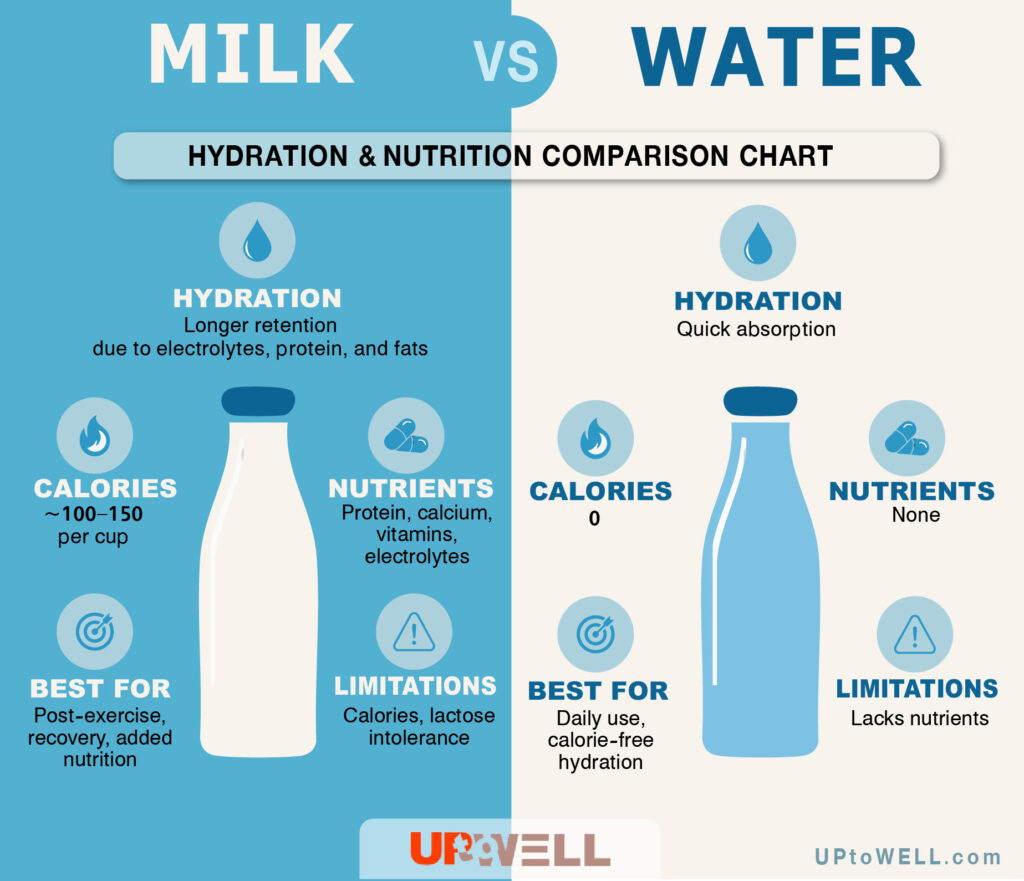
When to Choose Water or Milk
- Choose Water When:
- You need simple, calorie-free hydration.You’re drinking throughout the day.
- You’re in hot weather or doing light activity.
- Choose Milk When:
- After exercise (replenishes fluids + supports recovery).For children, elderly, or those needing nutrient-rich drinks.
- As a snack or meal complement.
Experts agree: water should remain your primary source of hydration, but milk can play a valuable role when you also need nutrients or sustained hydration.
Conclusion
So, which is better—milk or water?
- For daily hydration, water is the best choice. .
- For extra nutrition and recovery, milk is a strong contender.
The smartest choice is balance: drink water throughout the day, and use milk strategically when you need hydration plus nutrients. As Harvard Health points out, water remains the everyday essential,while CNN and Verywell Health highlight, milk deserves its place as a powerful hydrator in specific situations.
FAQs
1. Is milk more hydrating than water?
Yes, studies show milk retains fluids longer than water due to its electrolytes, protein, and fats.
2. Can I replace water with milk?
No. Experts stress water should remain your main hydrator; milk is a supplement, not a substitute.
3. What’s healthier overall: milk or water?
Milk may provide excellent hydration plus nutrients, but water remains essential for everyday hydration.
4. Should athletes drink milk after exercise?
Yes. Low-fat or chocolate milk is often recommended as a recovery drink because it hydrates and supports
5. How to Drink Water for Maximum Health Benefits
To maximize water hydration benefits, it’s not only about how much water you drink, but also when and how. Keep reading to learn more about healthy water-drinking habits.