


Table of Contents
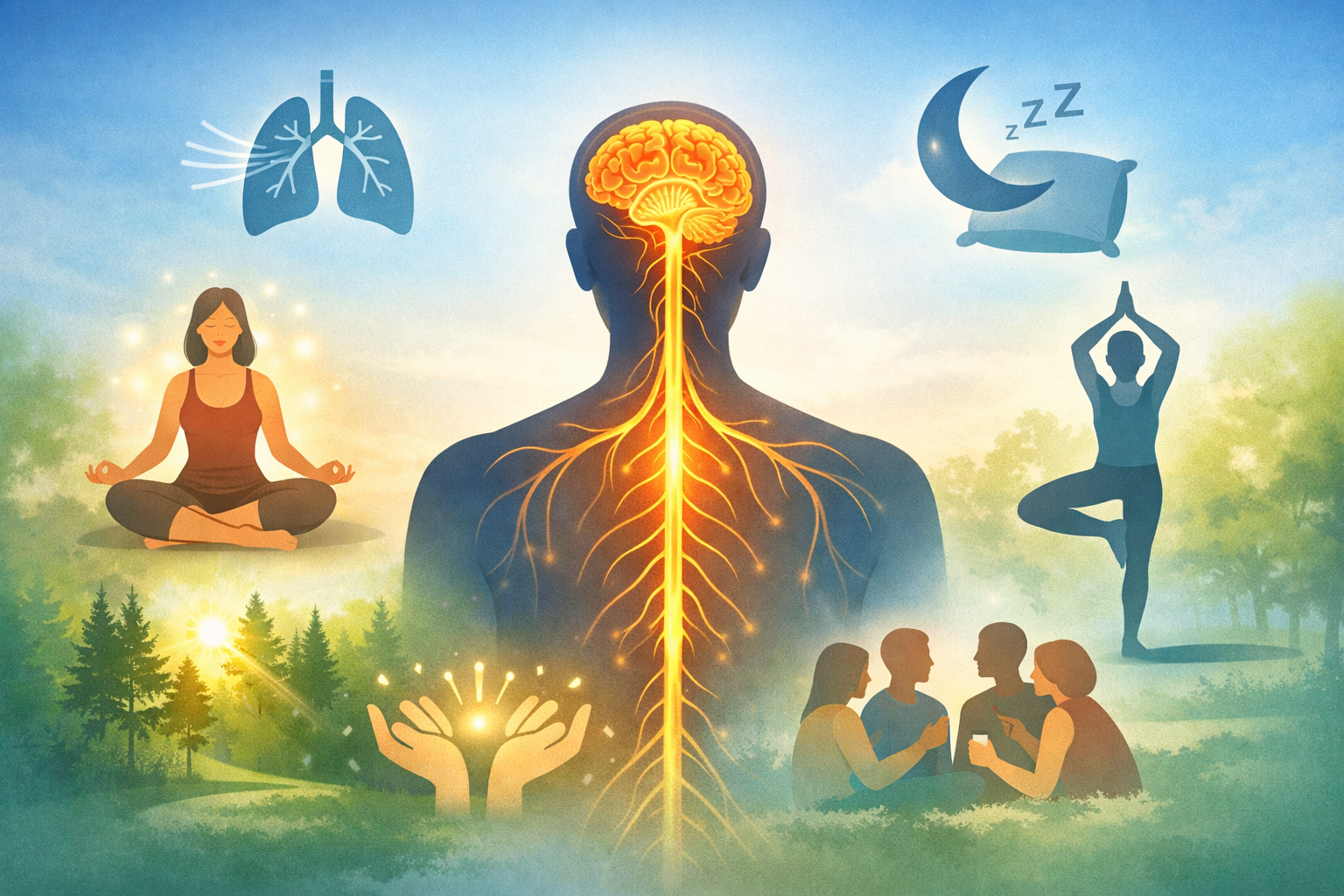
Modern life exposes many people to chronic stress, constant notifications, demanding work schedules, and limited recovery time. Over time, this can leave the body stuck in a heightened stress response, often described as being in “fight-or-flight mode.” Learning how to reset your nervous system naturally can help restore balance, improve mood, and support overall health.Lifestyle practices, especially breathing, mindful movement, and relaxation techniques, can directly influence the autonomic nervous system and reduce stress.
Understanding the Nervous System and Stress
The autonomic nervous system controls many automatic processes, including heart rate, digestion, and breathing. It has two primary branches:
- Sympathetic nervous system: activates the “fight-or-flight” response during stress
- Parasympathetic nervous system: promotes relaxation, recovery, and digestion
A key component of the parasympathetic system is the vagus nerve, which connects the brain to major organs like the heart, lungs, and digestive tract. According to the Cleveland Clinic, the vagus nerve helps slow heart rate, regulate digestion, and signal the body to relax after stress.
When the nervous system remains overactivated, stress hormones such as cortisol stay elevated, contributing to anxiety, fatigue, sleep issues, and digestive discomfort.
Signs Your Nervous System May Be Overloaded
An overstimulated nervous system can show up in many ways:
- Persistent anxiety or irritability
- Difficulty sleeping
- Digestive discomfort
- Chronic fatigue
- Brain fog or poor concentration
- Muscle tension
- Rapid or irregular heart rate
Research indexed in PubMed shows that prolonged stress affects cardiovascular, digestive, and emotional regulation systems.
Natural Ways to Reset Your Nervous System
Here are the most effective, research-backed ways to calm your nervous system and reduce stress naturally.
1. Deep Breathing to Calm Your Nervous System
Slow, diaphragmatic breathing activates the parasympathetic nervous system and improves heart-rate variability. Studies in Psychosomatic Medicine and PubMed confirm that deep breathing increases vagal activity and lowers stress.
How to practice:
- Sit comfortably with relaxed shoulders
- Inhale slowly through the nose for 4 seconds
- Let your belly expand
- Exhale slowly through the mouth for 6 seconds
- Repeat for 5–10 minutes
Even a few minutes can quickly reduce physiological stress.
2. Spend Time in Nature
Natural environments help reset your nervous system naturally by lowering cortisol and heart rate. Experts from Harvard Medical School highlight the mental fatigue relief and mood improvement from nature exposure. One of the most clinically proven ways to achieve this is forest bathing, which immerses you in nature and helps maximize stress reduction.
3. Mindful Movement & Exercise
Regular movement reduces stress hormones, improves sleep, and strengthens emotional resilience. Research by the American Psychological Association confirms the mental health benefits of consistent physical activity.
Effective methods include:
- Walking
- Yoga
- Swimming
- Stretching
- Light aerobics
You can further enhance nervous system calm by practicing walking meditation, which combines gentle movement with mindfulness for maximum stress reduction.
4. Improve Sleep Quality
Sleep is essential for nervous system recovery. Poor sleep keeps the stress response activated. The National Institutes of Health recommends 7–9 hours of quality sleep nightly to restore balance.
Tips:
- Keep a consistent schedule
- Reduce screens before bed
- Keep the bedroom cool and dark
Despite this, many people still feel mentally drained or fatigued even after sleeping long enough. Learn more about the common causes of feeling tired even after sleeping.
5. Mindfulness & Meditation for Nervous System Balance
Meditation and mindfulness trigger the relaxation response, lowering heart rate and calming stress. Even 5–10 minutes daily can help the body transition out of chronic stress. For a deeper understanding of the benefits and practical techniques, find out more about Mindfulness & Meditation Benefits.
6. Stimulate the Vagus Nerve
The vagus nerve is crucial for calming the body. Techniques to stimulate it include:
- Humming or singing
- Cold water exposure
- Gentle yoga
- Deep breathing
Research published in Biomolecules shows that vagus nerve stimulation improves emotional regulation and reduces stress. For simple, effective exercises you can do at home, try 7 Vagus Nerve Exercises.
7. Strengthen Social Connections
Positive social interactions trigger oxytocin release and reduce stress. According to American Psychological Association, supportive relationships improve emotional resilience and calm the nervous system.
How Long Does It Take to Reset the Nervous System?
Some techniques, like deep breathing or cold water exposure, can calm the body within minutes. Long-term regulation develops gradually with consistent habits such as sleep, exercise, mindfulness, and stress management, over weeks or months.
When to Seek Professional Support
Severe or persistent stress and anxiety may require professional care. The Mayo Clinic advises seeking help if stress interferes with sleep, work, or daily life. Cognitive behavioral therapy, counseling, or medical treatment may be necessary.
Conclusion
Resetting your nervous system naturally involves practices that activate the body’s relaxation response, such as deep breathing, mindful movement, quality sleep, meditation, time in nature, social connection, and vagus nerve stimulation. Even small daily actions, like a few minutes of breathing or a short walk, can restore calm, and consistent practice over time strengthens emotional resilience and balance.
References
- Cedars-Sinai. Bolster Your Brain by Stimulating the Vagus Nerve.
https://www.cedars-sinai.org/stories-and-insights/healthy-living/stimulating-the-vagus-nerve - Harvard Medical School. Relaxation Techniques: Breath Control Helps Quell Errant Stress Response.
https://www.health.harvard.edu/mind-and-mood/relaxation-techniques-breath-control-helps-quell-errant-stress-response - National Institutes of Health. Stress Effects on the Body.
https://www.nimh.nih.gov/health/publications/stress - Cleveland Clinic. Vagus Nerve: What It Is, Function, and Conditions.
https://my.clevelandclinic.org/health/body/22279-vagus-nerve - PubMed. Kromenacker, B. W., et al. (2018). Vagal Mediation of Low-Frequency Heart Rate Variability During Slow Yogic Breathing.
https://pubmed.ncbi.nlm.nih.gov/29771730/ - PubMed. Brown, R. P., & Gerbarg, P. L. (2005). Sudarshan Kriya Yogic Breathing in the Treatment of Stress, Anxiety, and Depression.
https://pubmed.ncbi.nlm.nih.gov/16086569/ - American Psychological Association. Stress Effects on the Body.
https://www.apa.org/topics/stress/body - Mayo Clinic. Stress Management.
https://www.mayoclinic.org/healthy-lifestyle/stress-management/in-depth/stress/art-20046037