


Table of Contents
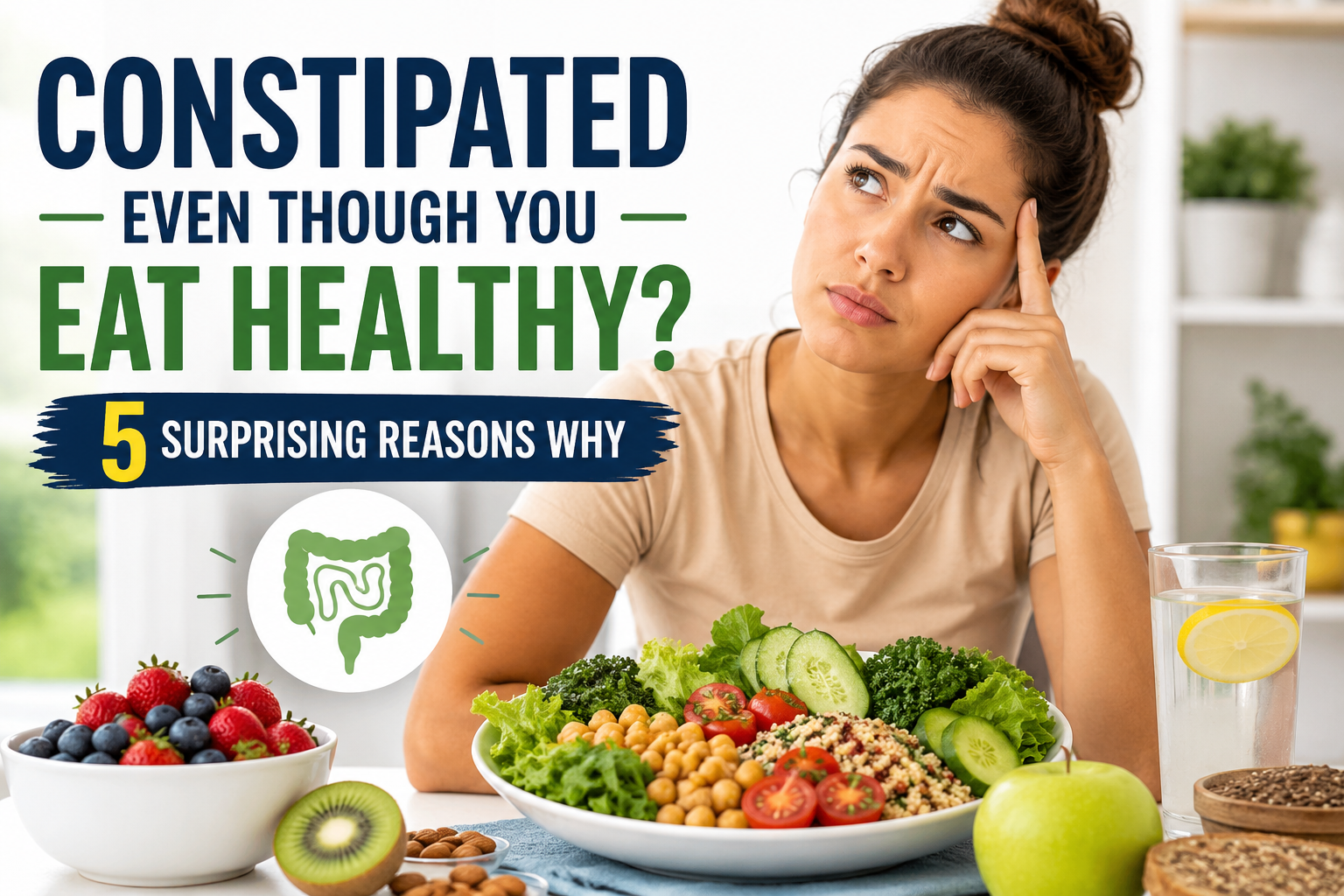
Eating healthy doesn’t always prevent constipation. Factors such as inadequate water intake, increasing fiber too quickly, certain healthy foods, lack of physical activity, stress, and bathroom habits can all contribute to constipation. In many cases, small lifestyle adjustments can help restore regular bowel movements.
Why Healthy Eating Doesn’t Always Prevent Constipation
Many people assume that eating fruits, vegetables, and whole grains automatically guarantees good digestion. While a healthy diet plays an important role, constipation depends on more than food alone.
Hydration, physical activity, stress levels, and bowel habits all affect how efficiently your digestive system works. That’s why some people still experience constipation despite making healthy food choices.
5 Reasons You May Be Constipated Despite Eating Healthy
1. You’re Eating More Fiber but Not Drinking Enough Water
Fiber is often recommended for constipation because it helps add bulk to stool and supports regular bowel movements. However, fiber needs water to do its job properly.
If you’ve recently increased your intake of whole grains, vegetables, beans, or fiber supplements without increasing your fluid intake, constipation may actually worsen.
According to the National Institute of Diabetes and Digestive and Kidney Diseases, fiber works best when combined with adequate fluid intake. Increasing fiber without enough water may contribute to constipation in some people.
Many people focus on eating more fiber while overlooking the importance of staying hydrated.
2. Some Healthy Foods May Make Constipation Worse
Digestive responses vary from person to person. The Cleveland Clinic notes that diet, hydration, and individual digestive factors can all influence constipation symptoms. Therefore, not all healthy foods affect digestion the same way.
For example:
- Unripe bananas contain more resistant starch and may contribute to constipation in some people.
- Large amounts of bran or fiber supplements may cause digestive discomfort if introduced too quickly.
- Dairy products such as milk, cheese, and yogurt may contribute to constipation in sensitive individuals.
These foods can still be part of a healthy diet, but they may not work the same way for everyone.
3. You Increased Fiber Too Quickly
Making healthier food choices is a positive step, but sudden changes can sometimes surprise your digestive system.
A rapid increase in:
- beans
- lentils
- vegetables
- whole grains
may temporarily cause bloating, gas, or constipation while your body adjusts.
Gradually increasing fiber intake often works better than making drastic dietary changes overnight.
4. You’re Not Moving Enough
Regular physical activity helps stimulate normal intestinal movement.
Even if you eat a healthy diet, spending most of the day sitting can slow digestion and contribute to constipation.
Simple activities such as walking, stretching, or regular exercise can support bowel function and improve digestive comfort.
5. You’re Ignoring the Urge to Go
Busy schedules often cause people to delay bathroom visits.
Over time, repeatedly ignoring the urge to have a bowel movement can make stools harder and more difficult to pass.
If possible, try to respond to your body’s natural signals rather than postponing them.
Can Stress and Anxiety Cause Constipation?
Yes.
The connection between the brain and digestive system is well established. According to the Cleveland Clinic, stress can affect how the digestive tract functions and may contribute to constipation in some individuals.
You may notice constipation becoming worse during:
- work pressure
- major life changes
- exams
- periods of anxiety
If your diet hasn’t changed but your stress levels have increased, stress may be contributing to the problem.
The connection between stress and digestion is often explained by the gut-brain connection, the constant communication between your digestive system and your brain. Researchers have found that stress, mood, and gut function can influence one another, which may help explain why constipation sometimes worsens during stressful periods. Learn more in our article: The Gut-Brain Connection: How Your “Second Brain” Shapes Mood and Mental Health.
How to Relieve Constipation Naturally
Drink More Water
Adequate hydration helps fiber work effectively and supports softer stools.
Increase Fiber Gradually
Rather than making sudden changes, increase fiber intake slowly to give your digestive system time to adapt. Psyllium husk is considered as one effective, natural solution for constipation that is gaining attention nowadays . Learn more in our article : Why Psyllium Husk works for constipation and how to use it.
Stay Physically Active
Regular movement helps stimulate bowel function and supports overall digestive health.
Maintain a Regular Bathroom Routine
Try to use the bathroom when your body signals the need, and avoid delaying bowel movements whenever possible.
When Should You See a Doctor?
Occasional constipation is common. However, consider seeking medical advice if you experience:
- persistent constipation
- blood in the stool
- unexplained weight loss
- severe abdominal pain
- sudden changes in bowel habits that do not improve
Both the Mayo Clinic and the National Health Service recommend seeking medical advice if constipation is persistent, severe, accompanied by blood in the stool, unexplained weight loss, or significant abdominal pain.
Frequently Asked Questions
Why am I constipated if I eat lots of vegetables?
Vegetables provide fiber, but fiber works best when combined with adequate fluid intake. Increasing vegetables without drinking enough water may contribute to constipation.
Can too much fiber cause constipation?
Yes. Increasing fiber too quickly or consuming large amounts without enough water can sometimes worsen constipation.
Can healthy foods cause constipation?
Some healthy foods, such as unripe bananas or large amounts of bran, may contribute to constipation in certain individuals.
What is the most common cause of constipation?
Common causes include inadequate fiber intake, insufficient hydration, physical inactivity, certain medications, and changes in routine.
References
- National Institute of Diabetes and Digestive and Kidney Diseases – Constipation
- Mayo Clinic – Constipation: Symptoms and Causes
- Cleveland Clinic – Constipation
- National Health Service – Constipation