


Table of Contents
Building good habits is often harder than people expect. Many people start with strong motivation, but after a few days or weeks, consistency fades. That is where habit tracking becomes powerful.
Habit tracking is the process of recording daily behaviors to improve consistency, productivity, and long-term habit formation. Whether your goal is improving health, increasing productivity, reading more books, exercising regularly, or sleeping better, tracking your habits can help turn intentions into lasting routines.
The popularity of habit tracking has grown significantly thanks to influential books such as Atomic Habits by James Clear and The 4-Hour Body by Tim Ferriss. Both emphasize the importance of systems, measurement, and consistency in personal improvement.
In this article, you will learn:
- what habit tracking is,
- why it works,
- the best habit tracking methods,
- common mistakes to avoid,
- and how to build a simple system that lasts.
What Is Habit Tracking?
Habit tracking is the process of monitoring your behaviors regularly to see whether you complete them consistently.
A habit tracker can be as simple as:
- checking boxes on paper,
- marking a calendar,
- using a spreadsheet,
- or tracking progress with a mobile app.
The goal is not perfection. The goal is awareness and consistency.
For example, you might track habits such as:
- drinking enough water,
- exercising,
- reading daily,
- waking up early,
- studying,
- meditating,
- or reducing screen time.
A simple daily habit tracker might look like this:
| Habit | Monday | Tuesday | Wednesday |
| Exercise | ✓ | ✓ | ✗ |
| Read 10 Pages | ✓ | ✓ | ✓ |
| Sleep Before 11 PM | ✗ | ✓ | ✗ |
Over time, these small records reveal powerful patterns.
Why Habit Tracking Works
Habit tracking combines psychology, motivation, and visual progress into one simple system.
Tracking Creates Awareness
Many people underestimate how inconsistent they are until they begin tracking. Recording behaviors helps you become more conscious of:
- wasted time,
- unhealthy routines,
- distractions,
- and missed opportunities.
Awareness is often the first step toward improvement.
Small Wins Build Momentum
One important idea from Atomic Habits is that small improvements repeated consistently create remarkable long-term results.
When you track habits, every completed action becomes a small victory. Those tiny wins build confidence and motivation.
Instead of focusing only on large goals such as:
- losing 20 kilograms,
- or becoming highly productive,
habit tracking shifts attention toward daily actions:
- walking for 15 minutes,
- writing one page,
- drinking more water,
- or reading for 10 minutes.
Habit Streaks Encourage Consistency
People naturally dislike breaking streaks. Seeing several successful days in a row creates psychological momentum and encourages continued effort.
Benefits of Habit Tracking
Habit tracking can improve many areas of life.
Better Health Habits
Many people use habit trackers for:
- exercise routines,
- hydration,
- sleep schedules,
- healthy eating,
- weight management,
- and reducing sugar intake.
Tracking helps identify what works, what causes setbacks, and which routines produce the best results.
Increased Productivity
Productivity habits may include:
- focused work sessions,
- studying,
- avoiding distractions,
- reading,
- journaling,
- or completing important tasks early.
Tracking creates accountability and helps reduce procrastination.
Improved Mental Wellness
Examples of mental wellness habits include:
- gratitude journaling,
- meditation,
- breathing exercises,
- mood tracking,
- and reducing social media use.
A habit tracker helps people remain consistent even during stressful periods.
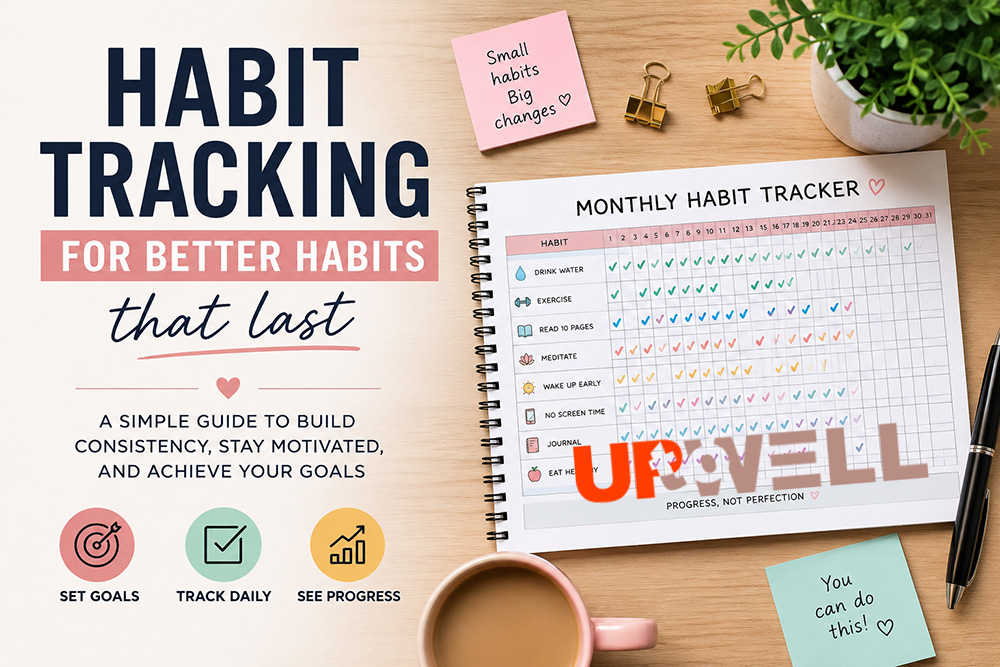
Monthly Habit Trackers: Why They Work
A monthly habit tracker provides a broader view of your progress than a daily checklist alone.
Benefits of using a monthly habit tracker include:
- seeing long-term progress,
- identifying missed days,
- measuring consistency,
- spotting recurring obstacles,
- and reviewing monthly performance.
Many people prefer a printable monthly habit tracker because it offers a simple and distraction-free way to monitor habits related to fitness, productivity, reading, hydration, sleep, and personal growth.
Whether you use a digital tool or a habit tracker printable, reviewing an entire month of data can reveal valuable insights that daily tracking may miss.
If you prefer a ready-to-use format, a printable monthly habit tracker can make it easier to monitor daily habits, review progress, and stay consistent throughout the month.
How to Start Habit Tracking for Beginners
Start With One or Two Habits
One of the biggest mistakes beginners make is trying to track everything at once.
Instead of tracking 15 habits, begin with:
- one health habit,
- and one productivity habit.
For example:
- drink more water,
- and read 10 pages daily.
Small systems are easier to maintain consistently.
Choose a Simple Tracking Method
The best habit tracking system is the one you will actually use.
Popular options include:
- notebooks,
- calendars,
- printable habit trackers,
- habit tracker templates,
- habit tracker spreadsheets,
- and mobile apps.
You do not need expensive tools to begin. Many people start with a free habit tracker or a printable habit tracker PDF.
Track Daily
Missing a day occasionally is normal. What matters most is returning to your routine and maintaining long-term consistency.
Review Weekly Progress
At the end of each week, ask yourself:
- Which habits were easiest?
- Which habits were difficult?
- What obstacles appeared repeatedly?
- What improvements can be made next week?
Reflection helps habit tracking become more effective over time.
Best Habit Tracking Methods
Paper Habit Trackers
Paper trackers remain popular because they are simple and distraction-free.
Examples include:
- bullet journals,
- printed habit tracker templates,
- wall calendars,
- and notebooks.
Many people enjoy physically checking completed habits.
Spreadsheet Habit Tracking
Spreadsheets provide flexibility and useful data analysis.
Programs such as Google Sheets and Microsoft Excel allow users to:
- calculate streaks,
- track percentages,
- and measure long-term consistency.
Habit Tracking Apps
Popular habit tracking apps include:
- Habitica,
- TickTick,
- Loop Habit Tracker,
- HabitNow,
- and Streaks.
These apps often provide reminders, charts, statistics, streak tracking, and goal-setting tools.
Printable Habit Trackers vs Digital Habit Trackers
Both paper and digital systems can be effective.
Printable Habit Trackers
Printable habit trackers are popular because they:
- reduce screen distractions,
- provide a visual record of progress,
- are easy to customize,
- and require no subscriptions.
Digital Habit Trackers
Digital habit trackers offer:
- reminders,
- automatic statistics,
- habit streak calculations,
- and cloud synchronization.
The most effective habit tracker is the one you consistently use.
Common Habit Tracking Mistakes
Tracking Too Many Habits
Tracking too much information quickly becomes overwhelming.
Focus on a few meaningful habits instead of trying to optimize every aspect of your life.
Obsessing Over Perfection
Habit tracking should support your life, not control it.
Occasional missed days are normal. Long-term consistency matters more than perfect streaks.
Using Unrealistic Goals
Instead of:
- exercising for two hours every day,
start with:
- exercising for 10 minutes.
Small habits are easier to maintain and often grow naturally over time.
Quitting After One Bad Week
Progress is rarely linear.
One difficult week does not erase months of improvement.
Habit Tracking Examples You Can Copy
Fitness Habit Tracker
- walk 8,000 steps,
- stretch daily,
- complete workouts,
- drink enough water.
Study Habit Tracker
- review notes,
- read daily,
- practice vocabulary,
- complete assignments early.
Morning Routine Tracker
- wake up early,
- avoid phone usage,
- meditate,
- plan the day.
Sleep Habit Tracker
- sleep before midnight,
- avoid caffeine late,
- reduce screen exposure.
Habit Tracking and Identity Change
One of the most powerful ideas in Atomic Habits is that lasting habits are connected to identity.
Instead of saying:
“I want to exercise.”
You begin thinking:
“I am someone who exercises regularly.”
Habit tracking becomes evidence of the person you are becoming.
Every completed habit reinforces a positive identity:
- a reader,
- a healthy person,
- a disciplined student,
- or a productive worker.
This mindset shift often creates more lasting motivation than goals alone.
Habit Tracking and Behavioral Psychology
Habit tracking is supported by a behavioral psychology principle known as self-monitoring.
Self-monitoring involves observing and recording your own behaviors. Research has consistently shown that people are more likely to improve habits when they actively measure them.
Tracking behaviors increases:
- awareness,
- accountability,
- self-regulation,
- and motivation.
This is one reason habit tracking is commonly used in health, education, productivity, and personal development programs.
Does Habit Tracking Really Work?
Habit tracking is not magic, but behavioral psychology strongly supports self-monitoring and consistency systems.
Tracking helps people:
- stay aware,
- build routines,
- notice patterns,
- and maintain motivation.
Habit tracking works best when:
- goals are realistic,
- systems are simple,
- and expectations remain balanced.
The real transformation comes from repeated daily actions.
All in all
Habit tracking is one of the simplest and most effective self-improvement tools available today.
You do not need complicated systems, expensive apps, or perfect discipline to begin. A notebook, calendar, printable habit tracker, or habit tracking app can create meaningful change.
The most important principle is consistency:
- small actions,
- repeated regularly,
- over long periods of time.
As emphasized in Atomic Habits and The 4-Hour Body, long-term success is usually the result of systems and repeated behaviors rather than short bursts of motivation.
- Start small.
- Track consistently.
- Focus on progress.
Over time, those small daily actions can lead to remarkable results.
Frequently Asked Questions
What is habit tracking?
Habit tracking is the process of recording daily behaviors to improve consistency, build routines, and achieve long-term goals.
Does habit tracking really work?
Yes. Habit tracking increases awareness, accountability, and motivation, making it easier to maintain positive routines.
What is the best habit tracking app?
Popular options include Habitica, TickTick, Loop Habit Tracker, HabitNow, and Streaks. The best choice depends on your preferences and goals.
How do beginners start tracking habits?
Beginners should start with one or two simple habits and use a notebook, calendar, printable habit tracker, spreadsheet, or mobile app.
Are printable habit trackers effective?
Yes. Many people prefer printable habit trackers because they are simple, distraction-free, and provide a clear visual record of progress.
References :
- Atomic Habits — James Clear
- Tiny Habits — BJ Fogg, PhD
- Self-Monitoring research
- Phillippa Lally’s habit-formation research