


Table of Contents
Last updated : July 4, 2026
You’ve probably heard that probiotics are “good bacteria” that support gut health. Maybe you’ve seen yogurt labeled with live cultures, noticed probiotic drinks in the supermarket, or wondered whether you should take a probiotic supplement.
But what exactly are natural probiotics?
Which foods actually contain them?
And are they really better than supplements?
These are common questions, and the answers aren’t always as simple as advertisements make them seem.
Natural probiotics are live microorganisms found in certain foods that may help support a healthy gut microbiome when consumed in adequate amounts. However, not every fermented food is a probiotic, and not every probiotic food provides the same benefits.
Understanding the difference can help you make better food choices and avoid common misconceptions.
By the end of this article, you’ll understand:
- What natural probiotics are and how they work.
- How probiotics differ from prebiotics.
- Which foods are the best natural sources of probiotics.
- How natural probiotics support gut health and overall well-being.
- Whether probiotic foods or supplements are the better choice.
- Simple, evidence-based ways to support a healthy gut microbiome.
- When it’s important to seek professional medical advice.
What Are Natural Probiotics?
Natural probiotics are live microorganisms that are naturally present in certain foods. According to the International Scientific Association for Probiotics and Prebiotics (ISAPP), a microorganism is considered a probiotic only if it:
- Remains alive when consumed.
- Is consumed in adequate amounts.
- Has been scientifically shown to provide a health benefit.
In simple terms, probiotics are beneficial microorganisms that you can get from certain fermented foods or specially formulated supplements.
More Than Just “Good Bacteria”
Probiotics are often described as “good bacteria.” While that’s a helpful way to introduce the concept, it’s only part of the story.
Your digestive system is home to trillions of microorganisms, including bacteria, yeasts, and other microbes. Together, they form your gut microbiome, a diverse community that helps support normal digestion, maintain your gut’s protective barrier, and interact with your immune system.
Not All Fermented Foods Are Probiotics
This is one of the biggest misconceptions about probiotics.
Many foods are made through fermentation, but not every fermented food contains live probiotic microorganisms by the time you eat it. Heating, pasteurization, or other processing methods may destroy the live microbes after fermentation.
To qualify as a probiotic, a food must contain live microorganisms that have been scientifically shown to provide a health benefit when consumed in adequate amounts.
That’s why foods such as yogurt with live cultures, kefir, and some traditionally fermented foods are commonly considered natural probiotic foods, while other fermented products may not meet the scientific definition.
If you want to add more natural probiotics to your diet, don’t assume that every fermented food is a probiotic. Instead, look for foods that contain live cultures and have been shown to provide beneficial microorganisms as part of a balanced, healthy diet.
How Do Natural Probiotics Support Gut Health?
Your digestive system is home to trillions of microorganisms that make up your gut microbiome. This diverse community of bacteria, fungi, and other microbes helps keep your digestive system functioning normally.
When your gut microbiome is healthy and balanced, it helps:
- Digest certain foods more efficiently.
- Produce beneficial compounds.
- Support your gut’s protective barrier.
- Interact with your immune system.
- Maintain a healthy digestive environment.
What the Evidence Says
Research suggests that natural probiotics can temporarily add beneficial microorganisms to your digestive tract. While these microbes don’t always become permanent residents, they may help support the normal balance and function of your gut microbiome while they are present.
The World Gastroenterology Organisation (WGO) and the National Center for Complementary and Integrative Health (NCCIH) explain that the effects of probiotics are strain-specific. Some probiotic strains have been shown to support digestive health in certain situations, but their benefits depend on the specific microorganism, the amount consumed, and the health outcome being studied.
Natural probiotic foods can be a valuable part of a healthy diet, but they aren’t a magic solution for digestive health. Eating a variety of probiotic-rich foods alongside plenty of fiber, regular physical activity, good sleep, and other healthy lifestyle habits is one of the best ways to support a healthy gut microbiome.
Natural Probiotics vs. Prebiotics: What’s the Difference?
Although they sound similar, probiotics and prebiotics are not the same thing. In fact, they work together to support a healthy gut microbiome.
Probiotics are live beneficial microorganisms that you consume through certain foods or supplements.
Prebiotics, on the other hand, are types of dietary fiber that your body cannot digest. Instead, they serve as food for the beneficial microorganisms already living in your gut, helping them grow and thrive.
Think of it this way:
- Probiotics add beneficial microorganisms to your gut.
- Prebiotics help feed the beneficial microorganisms that are already there.
The International Scientific Association for Probiotics and Prebiotics (ISAPP) defines prebiotics as substances that are selectively used by beneficial microorganisms and help support their growth and activity. Research suggests that eating both probiotic-rich and prebiotic-rich foods may help support a healthier and more diverse gut microbiome than relying on either alone.
Good Sources of Prebiotics
Many everyday plant foods naturally contain prebiotic fiber, including:
- Garlic
- Onions
- Leeks
- Asparagus
- Bananas
- Oats
- Chicory root
- Beans and lentils
Adding natural probiotics to your diet is only part of the picture. Eating plenty of fiber-rich foods helps nourish your existing gut microbiome and supports the beneficial microorganisms introduced through probiotic foods. For the best support, aim to include both probiotic and prebiotic foods as part of a balanced, varied diet.
The Best Natural Probiotic Foods
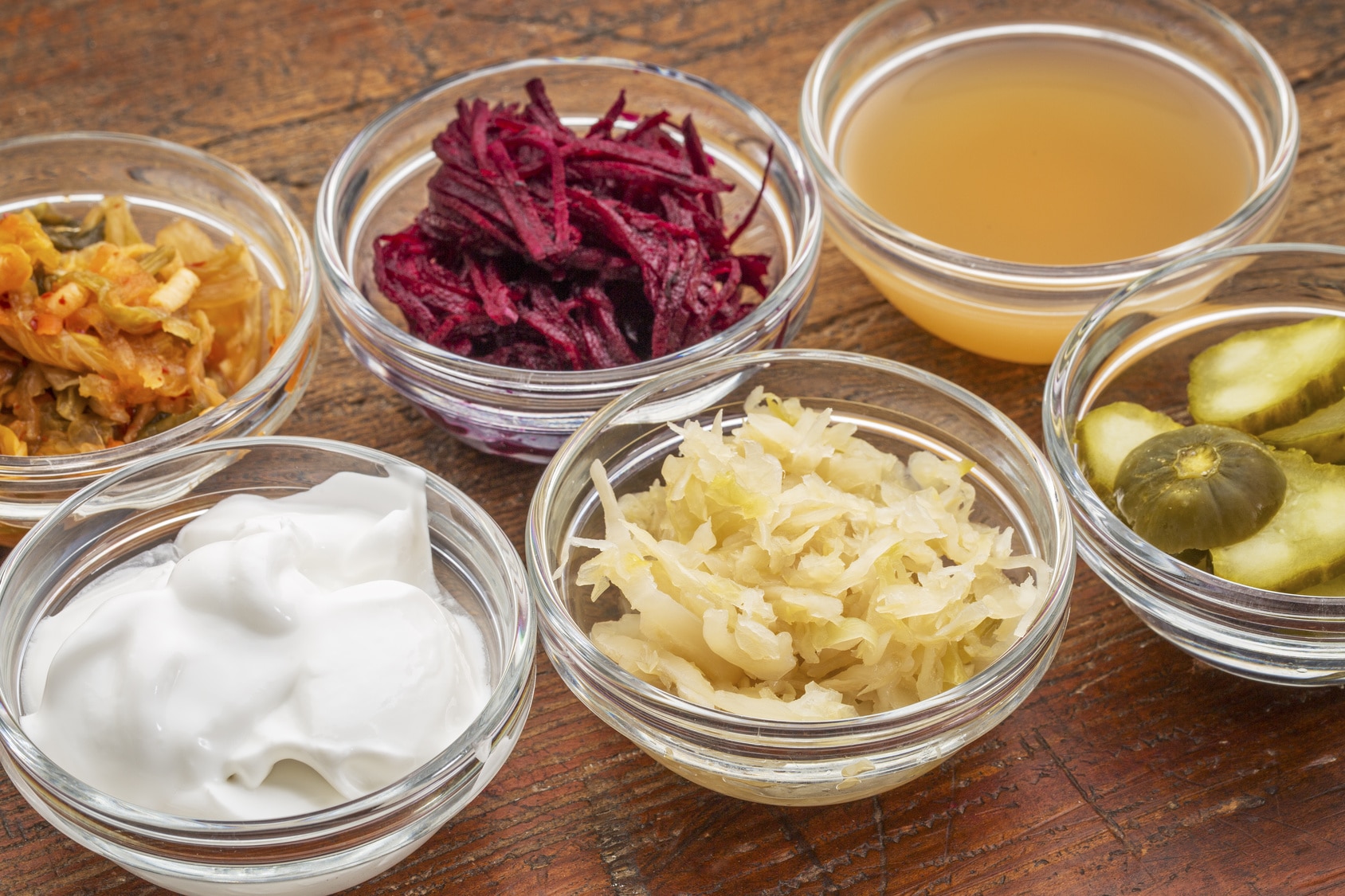
If you want to add more natural probiotics to your diet, you don’t need exotic ingredients or expensive supplements. Many everyday fermented foods naturally contain live beneficial microorganisms that can help support a healthy gut microbiome.
However, not all fermented foods qualify as probiotics. Some are pasteurized or heat-treated after fermentation, which may destroy the live microorganisms. Choosing foods that contain live cultures gives you the best chance of getting probiotic benefits.
The foods below are among the best natural sources of probiotics, based on guidance from the International Scientific Association for Probiotics and Prebiotics (ISAPP), the National Institutes of Health (NIH), and the World Gastroenterology Organisation (WGO).
1. Dairy Sources
Fermented dairy products are among the best-studied natural sources of probiotics. They naturally contain live cultures and are easy to include in most diets.
Yogurt: The Everyday Favorite
Yogurt is one of the best-known natural probiotic foods. It’s made by fermenting milk with beneficial bacteria, most commonly Lactobacillus and Bifidobacterium species.
For the greatest benefit, choose plain yogurt labeled “live and active cultures.” Many flavored yogurts contain added sugars, while some heat-treated products no longer contain live microorganisms.
Kefir: A More Diverse Source of Probiotics
If yogurt is the classic choice, kefir takes fermentation a step further. This fermented milk drink is made using kefir grains that contain a diverse mixture of beneficial bacteria and yeasts, giving it a broader range of live microorganisms than yogurt.
Choose unsweetened kefir whenever possible, and enjoy it on its own, with breakfast, or blended into a smoothie.
2. Fermented Vegetables
Fermented vegetables are a great option if you’re looking for plant-based sources of natural probiotics. In addition to beneficial microorganisms, they also provide fiber, vitamins, and plant compounds that support overall digestive health.
Sauerkraut: A Traditional Fermented Favorite
Sauerkraut is made by naturally fermenting finely shredded cabbage with salt. During fermentation, beneficial bacteria develop naturally, creating one of the best-known probiotic vegetable foods.
To get probiotic benefits, choose raw, unpasteurized sauerkraut from the refrigerated section. Shelf-stable varieties are often pasteurized, which may destroy the live microorganisms.
Best for: Adding probiotics and fiber to sandwiches, salads, or side dishes.
Kimchi: A Flavorful Probiotic Food
Kimchi is a traditional Korean dish made by fermenting vegetables, most commonly napa cabbage and radishes, with garlic, ginger, chili peppers, and other seasonings. It naturally provides beneficial microorganisms while also supplying fiber and a variety of vitamins.
Because some commercial products are pasteurized, refrigerated varieties labeled with live cultures are generally the better choice if you’re looking for probiotic benefits.
Best for: People who enjoy bold flavors and want a spicy, plant-based probiotic food.
Naturally Fermented Pickles
Not all pickles are probiotics. Traditional pickles made by fermenting cucumbers in a saltwater brine can contain live beneficial microorganisms, while pickles preserved in vinegar are not fermented and typically don’t provide probiotic cultures.
When shopping, look for naturally fermented pickles in the refrigerated section rather than shelf-stable vinegar pickles.
Read the label before you buy. Terms like “fermented,” “contains live cultures,” or “unpasteurized” can help you identify products that still contain live beneficial microorganisms. If a fermented food has been pasteurized after fermentation, many of its probiotic microbes may no longer be alive.
3. Plant-Based Fermented Foods
If you follow a vegetarian or vegan diet, fermented soy foods can be excellent additions to your meals. Besides providing beneficial microorganisms, they’re also rich in protein and other important nutrients.
Miso: A Traditional Japanese Staple
Miso is a fermented soybean paste commonly used in Japanese cuisine. It’s made by fermenting soybeans with a beneficial fungus called Aspergillus oryzae, producing a rich, savory flavor.
Because high temperatures can reduce or destroy live microorganisms, it’s best to stir miso into soups or sauces after cooking, rather than boiling it.
Best for: Adding rich flavor to soups, dressings, marinades, and grain bowls.
Tempeh: A Protein-Packed Fermented Food
Tempeh is made by fermenting whole soybeans into a firm, cake-like food. It’s naturally high in protein, fiber, and several vitamins and minerals, making it a popular choice for plant-based diets.
Although some commercial tempeh is cooked during processing, which may reduce the number of live microorganisms, it remains a highly nutritious fermented food and an excellent alternative to meat.
4. Fermented Drinks
Fermented drinks can also contribute beneficial microorganisms, although the amount and types of live cultures vary between products.
Kombucha: A Refreshing Fermented Tea
Kombucha is made by fermenting sweetened tea with a symbiotic culture of bacteria and yeast (SCOBY). The result is a lightly fizzy drink containing organic acids and, in many cases, live microorganisms.
When buying kombucha, choose low-sugar varieties and check the label for live cultures, as some commercial products are pasteurized after fermentation.
You don’t need to eat every probiotic food on this list. Instead, aim for variety. Including two or three different probiotic foods each week, alongside plenty of fiber-rich fruits, vegetables, legumes, and whole grains, helps create a healthier environment for your gut microbiome
Should You Choose Natural Probiotic Foods or Supplements?
For most healthy people, natural probiotic foods are the best place to start. They provide live beneficial microorganisms along with protein, vitamins, minerals, and other nutrients that contribute to overall health.
Probiotic supplements can also provide beneficial microorganisms, but they aren’t a one-size-fits-all solution. Different products contain different strains, doses, and combinations of microbes, and not every supplement has been studied for the same health benefits.
What the Evidence Says
The World Gastroenterology Organisation (WGO) and the National Center for Complementary and Integrative Health (NCCIH) explain that probiotic benefits are strain-specific. This means a supplement shown to help one condition may not be effective for another, even if it contains similar microorganisms.
Current evidence also suggests that, for most healthy adults, a balanced diet that includes probiotic-rich and fiber-rich foods is an excellent foundation for supporting a healthy gut microbiome.
If your goal is to support everyday digestive health, start by including a variety of natural probiotic foods in your diet. A probiotic supplement may be appropriate in certain situations, but it’s best chosen for a specific purpose and, ideally, with guidance from a healthcare professional.
Build your plate before your medicine cabinet.
Try adding one probiotic food to your weekly routine, such as yogurt, kefir, kimchi, or sauerkraut, and pair it with fiber-rich foods like oats, bananas, beans, or vegetables. Together, they help nourish a healthier gut microbiome.
Can Natural Probiotics Cause Side Effects?
Natural probiotic foods are generally safe for most healthy people and have been eaten as part of traditional diets for centuries. However, increasing your intake too quickly may cause temporary digestive symptoms while your gut microbiome adjusts.
Some people notice:
- Mild bloating
- Increased gas
- Temporary changes in bowel habits
These effects are usually mild and improve within a few days as your digestive system adapts.
The National Center for Complementary and Integrative Health (NCCIH) notes that probiotic foods and supplements are generally considered safe for healthy individuals. However, people with severely weakened immune systems, serious underlying illnesses, or those recovering from major surgery should consult a healthcare professional before using probiotic supplements.
If you’re new to probiotic foods, there’s no need to change your diet overnight. Start with small portions and gradually introduce different probiotic-rich foods over time. If you experience persistent digestive symptoms or have an underlying medical condition, seek advice from a qualified healthcare professional before making significant dietary changes or starting probiotic supplements.
Frequently Asked Questions
What are the best natural probiotic foods?
Some of the best natural probiotic foods include yogurt with live cultures, kefir, sauerkraut, kimchi, miso, tempeh, kombucha, and naturally fermented pickles. To receive probiotic benefits, choose products that contain live cultures, as some fermented foods are pasteurized after fermentation.
Are all fermented foods probiotics?
No. While probiotics are found in some fermented foods, not every fermented food qualifies as a probiotic. According to the International Scientific Association for Probiotics and Prebiotics (ISAPP), a probiotic must contain live microorganisms that have been scientifically shown to provide a health benefit when consumed in adequate amounts.
Are natural probiotics better than probiotic supplements?
For most healthy people, natural probiotic foods are a great place to start. They provide beneficial microorganisms together with protein, vitamins, minerals, and other nutrients. Probiotic supplements may be useful in certain situations, but their benefits depend on the specific strains, the dose, and the reason they’re being used.
How long does it take natural probiotics to work?
There isn’t a single timeline. The effects of probiotics depend on the specific strains, the amount consumed, your overall diet, and your individual gut microbiome. Building healthy eating habits over time is more important than expecting immediate results.
Can natural probiotics support digestive health?
Research suggests that certain probiotic strains may support digestive health in specific situations. However, probiotic effects are strain-specific, meaning not every probiotic provides the same benefits, and responses can vary from person to person.
Do natural probiotics survive stomach acid?
Some do, and some don’t. To qualify as a probiotic, a microorganism must remain alive when consumed and have been scientifically shown to provide a health benefit. Different probiotic strains vary in their ability to survive the journey through the digestive system.
Can I eat probiotic foods every day?
Yes. For most healthy adults, probiotic-rich foods such as yogurt, kefir, and other traditionally fermented foods can be enjoyed as part of a balanced daily diet. Eating a variety of probiotic and fiber-rich foods is generally more beneficial than relying on a single food.
Who should talk to a healthcare professional before using probiotics?
Natural probiotic foods are generally considered safe for most healthy people. However, individuals with severely weakened immune systems, serious underlying illnesses, or those considering probiotic supplements for a medical condition should consult a healthcare professional before use.
Here’s a quick summary of the most important points:
- Natural probiotics are live microorganisms that have been scientifically shown to provide a health benefit when consumed in adequate amounts.
- Not all fermented foods are probiotics. Some are pasteurized after fermentation and no longer contain live beneficial microorganisms.
- Yogurt, kefir, sauerkraut, kimchi, miso, tempeh, kombucha, and naturally fermented pickles are among the best natural probiotic foods.
- Probiotic benefits are strain-specific, meaning different microorganisms may provide different health effects.
- A healthy gut depends on more than probiotics. Pair probiotic foods with fiber-rich foods to help support a diverse gut microbiome.
- For most healthy people, food comes first. Probiotic supplements may be appropriate in certain situations but should be chosen for a specific purpose.
References & Scientific Sources
- International Scientific Association for Probiotics and Prebiotics (ISAPP). Probiotics: Definition, Scope, and Scientific Consensus.
https://isappscience.org/ - National Center for Complementary and Integrative Health (NCCIH). Probiotics: What You Need To Know.
https://www.nccih.nih.gov/health/probiotics-what-you-need-to-know - National Institutes of Health (NIH), Office of Dietary Supplements. Probiotics – Health Professional Fact Sheet.
https://ods.od.nih.gov/factsheets/Probiotics-HealthProfessional/ - World Gastroenterology Organisation (WGO). Global Guidelines: Probiotics and Prebiotics.
https://www.worldgastroenterology.org/guidelines/probiotics-and-prebiotics - Hill C, Guarner F, Reid G, et al. The International Scientific Association for Probiotics and Prebiotics Consensus Statement on the Scope and Appropriate Use of the Term Probiotic. Nature Reviews Gastroenterology & Hepatology. 2014;11(8):506–514.
https://www.nature.com/articles/nrgastro.2014.66 - Gibson GR, Hutkins R, Sanders ME, et al. The International Scientific Association for Probiotics and Prebiotics (ISAPP) Consensus Statement on the Definition and Scope of Prebiotics. Nature Reviews Gastroenterology & Hepatology. 2017;14:491–502.
https://www.nature.com/articles/nrgastro.2017.75