


Table of Contents
Edema, the swelling caused by excess fluid trapped in your body’s tissues — can be uncomfortable and even painful. Whether it’s due to injury, chronic conditions, or after cancer treatment, managing edema effectively is crucial for quality of life. One of the most trusted solutions recommended by experts worldwide is compression garments.
In this article, you’ll learn what compression garments are, how they help reduce edema, and what experts and research say about their effectiveness.
What Is Edema and Why Does It Occur?
Edema happens when fluid builds up in your tissues, causing swelling, usually in the legs, feet, arms, or hands. It can result from:
- Poor circulation (like chronic venous insufficiency)
- Lymphatic system problems (lymphedema)
- Injuries or surgeries
- Medical conditions such as heart, liver, or kidney disease
Without proper care, edema can lead to discomfort, reduced mobility, and skin complications.
What Are Compression Garments?
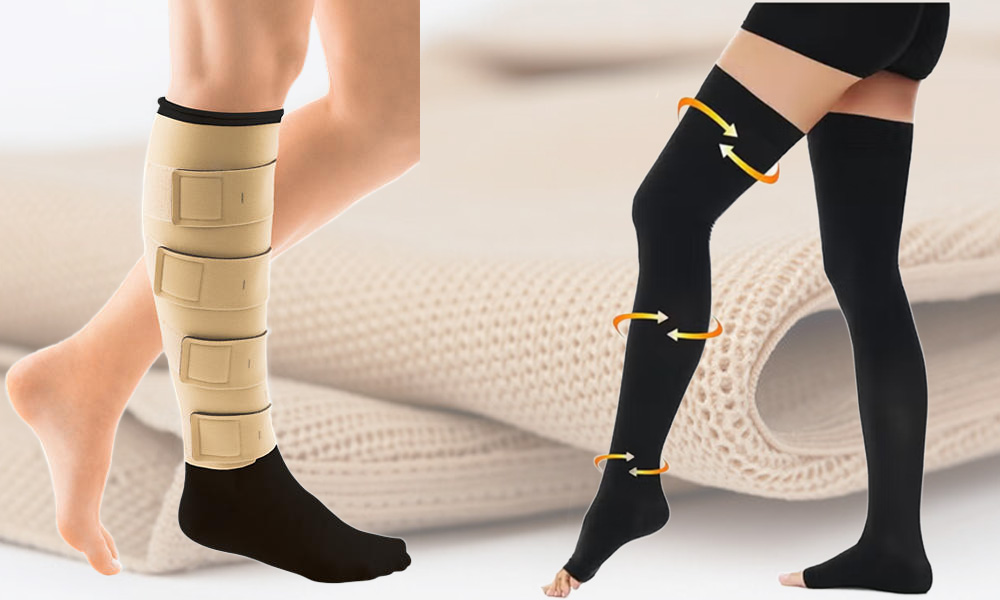
Compression garments are specially designed clothing items like stockings, sleeves, or wraps that apply gentle pressure to the swollen areas. This pressure helps improve circulation, prevents fluid buildup, and supports the body’s natural lymphatic drainage.
There are various types of compression garments, including:
- Graduated compression stockings
- Compression sleeves
- Adjustable wraps with Velcro closures
Choosing the right type and pressure level is essential for effective edema management.
How Do Compression Garments Help With Edema?
According to the Mayo Clinic and NHS UK, compression garments improve blood and lymph flow by applying targeted pressure. This helps push excess fluid out of swollen tissues and prevents new fluid from accumulating.
For example, after cancer treatments, the American Cancer Society recommends compression sleeves to manage lymphedema in the arms by enhancing lymphatic drainage.
A 2024 clinical study published on ScienceDirect highlights the benefits of adjustable compression wraps, showing they not only reduce swelling but also improve patient independence and comfort. Patients reported easier self-application and better daily function.
Choosing the Right Compression Garment
Not all compression garments are created equal. Factors to consider include:
- Compression class (pressure level): Usually ranges from mild (Class 1) to very strong (Class 4). A healthcare professional can recommend the appropriate level.
- Fit and comfort: Poorly fitting garments can cause skin damage or fail to reduce swelling. Adjustable wraps, like those studied in the ScienceDirect article, offer customizable fit and ease of use.
- Material and durability: Breathable, lightweight fabrics improve comfort during daily wear.
The Norton School of Lymphatic Therapy emphasizes the importance of patient education to ensure proper use, cleaning, and replacement of garments.
Tips for Using Compression Garments Effectively
- Wear garments as directed by your healthcare provider, often during the day and remove at night.
- Ensure proper fit; get professionally measured.
- Combine compression therapy with exercise and skin care for best results.
- Replace garments regularly as elasticity decreases over time.
All in all
Compression garments are a proven, effective, and often essential tool in managing edema and lymphedema. Supported by extensive clinical research and trusted health organizations like the Mayo Clinic, NHS, and American Cancer Society, these garments improve swelling, comfort, and overall quality of life.
If you or a loved one is dealing with edema, consult your healthcare provider about the right compression garment for you, because better circulation means better health.
FAQs About Compression Garments for Edema
Q1: Can I buy compression garments over-the-counter?
A: Some mild compression stockings are available OTC, but professional fitting is recommended for best results.
Q2: How long do compression garments last?
A: Typically 3–6 months before they lose elasticity and effectiveness.
Q3: Are compression garments painful?
A: When properly fitted, they should feel snug but not painful.
References :
- Mayo Clinic – Edema: Symptoms and Causes
https://www.mayoclinic.org/diseases-conditions/edema/symptoms-causes/syc-20366493 - NHS (UK) – Lymphoedema – Treatment
https://www.nhs.uk/conditions/lymphoedema/treatment - American Cancer Society – Lymphedema After Cancer Treatment
https://www.cancer.org/treatment/treatments-and-side-effects/physical-side-effects/lymphedema.html - Journal of Vascular Surgery – Graduated Compression Stockings in Chronic Venous Disease: A Meta-analysis
https://www.jvascsurg.org/article/S0741-5214%2817%2932565-X/fulltext - Lymphatic Research and Biology – Effectiveness of Compression Garments in Managing Lymphedema https://www.liebertpub.com/doi/10.1089/lrb.2019.0040
- National Lymphedema Network (NLN) – Position Statement on Compression Therapy
https://lymphnet.org/position-papers - International Society of Lymphology (ISL) – Consensus Document on Lymphedema Diagnosis and Treatment
https://journals.viamedica.pl/acta_angiologica/article/view/56686/44490 - ScienceDirect – Adjustable Compression Garments Improve Self‑Care and Edema Reduction https://www.sciencedirect.com/science/article/abs/pii/S1078588424004775
- Cambridge Media Journals – Managing Lymphoedema: Compression Therapy https://journals.cambridgemedia.com.au/wpr/volume-24-number-4/evidence-summary-managing-lymphoedema-compression-therapy
- Norton School of Lymphatic Therapy – Educational Resources on Compression Garment Use https://www.nortonschool.com/
- Verywell Health – How Compression Sleeves Treat and Prevent Lymphedema
https://www.verywellhealth.com/what-is-a-compression-sleeve-430209