


Table of Contents
You finally have a quiet moment. Your work is done, your phone is silent, and nothing urgent needs your attention. Yet your shoulders still feel tense, your heart seems to beat a little faster than usual, and your mind won’t slow down.
You pause and wonder:
“Why do I feel stressed when nothing is actually wrong?”
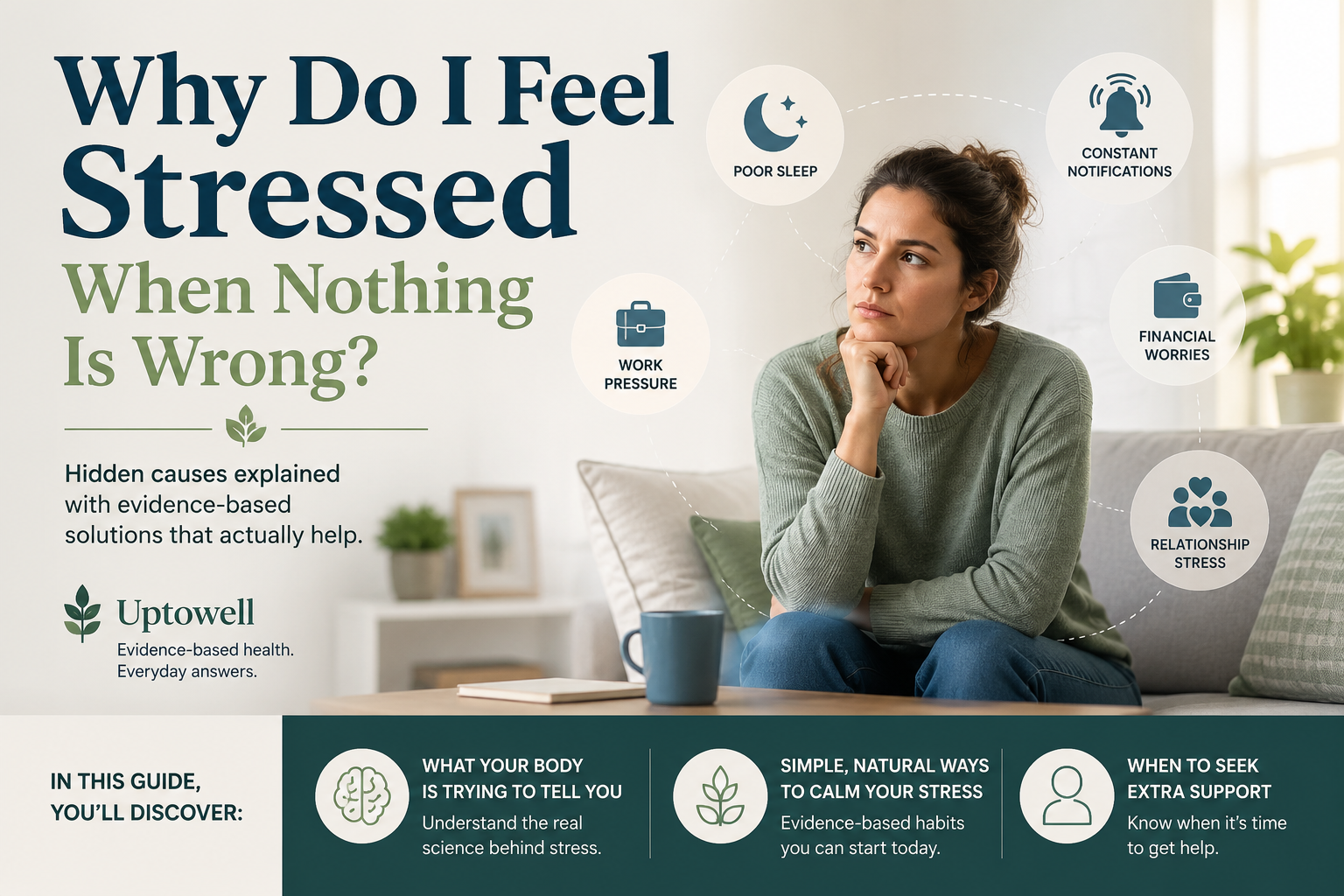
If this sounds familiar, you’re not alone. Many people feel stressed even when they can’t point to one clear reason why. Often, it’s not one big problem causing the stress. Instead, it’s the effect of many small things adding up over time, poor sleep, mental overload, constant notifications, financial worries, relationship challenges, or simply trying to keep up with a busy life.
According to the American Psychological Association (APA), stress is your body’s natural response to situations that require you to adapt or respond. While this response originally helped humans deal with immediate physical danger, today it’s often triggered by everyday situations rather than emergencies.
When your body doesn’t get enough time to recover between these everyday stressors, your stress response can stay active for longer than it should. Over time, this may leave you feeling tense, mentally tired, emotionally overwhelmed, or physically exhausted, even when nothing around you seems seriously wrong.
Feeling this way doesn’t automatically mean that there’s an underlying medical problem. In many cases, it’s simply your body’s response to carrying more stress than you realize. The good news is that healthy daily habits, regular recovery, and effective stress-management strategies can help your body return to a healthier balance.
In this article, you’ll learn why stress can continue even when life seems fine, the hidden factors that may be keeping your stress response active, and practical, evidence-based habits that can help you feel calmer and better equipped to handle everyday life.
What You’ll Learn
By the end of this article, you’ll understand:
- Why you can feel stressed even when nothing seems wrong.
- The hidden everyday factors that may be keeping your stress response active.
- How ongoing stress affects your brain, body, and overall health.
- Simple, evidence-based habits that can help you feel calmer and more resilient.
- When it’s important to seek professional medical advice.
Can You Feel Stressed Even When Nothing Is Wrong?
Yes, you can.
Many people think stress only happens during major life events, such as losing a job, dealing with financial problems, or facing a serious illness. But that’s not how your body works.
The American Psychological Association (APA) defines stress as your body’s natural response to anything that requires you to adapt or respond. That could be a major life event, but it can also be the small demands you deal with every day, poor sleep, a heavy workload, constant notifications, relationship challenges, financial worries, or simply trying to do too much at once.
Whenever your brain senses a challenge, it prepares your body to deal with it. It releases stress hormones like adrenaline and cortisol, which increase your heart rate, sharpen your focus, and give your muscles extra energy. This is often called the fight-or-flight response, and it’s designed to help you respond quickly when you need to.
The problem is that your brain doesn’t always tell the difference between a real emergency and the everyday pressures of modern life. Missing a deadline, sitting in traffic, checking work emails late at night, or constantly switching between tasks may not be dangerous, but your brain can react as if they require the same stress response.
If this happens day after day without enough time to recover, your body may remain in a state of stress longer than it was designed to.
The Science in Simple Words :
Think of your stress response like the notification system on your phone.
Its job is to get your attention when something needs a response.
The problem is that if notifications keep arriving all day, your phone never really gets a break, and neither do you.
Your brain works in a similar way. Every challenge, interruption, or worry asks for a little of your attention. One notification isn’t a problem. But when they keep coming without enough time to recover, your stress response can stay active longer than it should.
Over time, that can leave you feeling tense, mentally tired, or emotionally overwhelmed, even if nothing particularly bad has happened.
This idea is supported by the work of neuroscientist Dr. Bruce S. McEwen, who introduced the concept of allostatic load. His research showed that the body isn’t affected only by major stressful events. The repeated effect of many small stressors can also place strain on the body’s systems over time.
The National Institute of Mental Health (NIMH) also explains that ongoing stress can affect both physical and mental health. It may influence your sleep, mood, concentration, energy levels, immune function, and overall well-being, even when you can’t point to one obvious cause.
The encouraging part is that many of these everyday stressors can be changed. Improving your sleep, making time to recover, staying physically active, eating well, and setting healthy boundaries can help your body’s stress response gradually return to a healthier balance.
Key Insight
Feeling stressed doesn’t always mean that something is wrong with you.
More often, it’s your body’s normal response to the combined effect of many small demands rather than one major problem.
Understanding those hidden stressors is the first step toward changing them.
8 Hidden Reasons You May Feel Stressed Even When Life Seems Fine
If you can’t identify one clear reason for feeling stressed, that doesn’t mean the feeling isn’t real.
In many cases, stress isn’t caused by one major event. Instead, it’s the result of several small physical, mental, and lifestyle factors that build up over time. On their own, these everyday pressures may seem harmless. Together, they can keep your body’s stress response active without you even realizing it.
Here are eight evidence-based reasons why this can happen.
1. Poor Sleep Makes Everyday Stress Feel Bigger
Have you ever noticed that after a poor night’s sleep, even small problems seem much harder to deal with?
That’s not your imagination.
Research from the Centers for Disease Control and Prevention (CDC) shows that getting enough quality sleep is essential for both physical and mental health. While you sleep, your brain processes emotions, restores energy, and helps regulate stress hormones. When sleep is cut short or disrupted, those recovery processes don’t work as well.
The next day, ordinary situations, heavy traffic, a difficult email, or a small disagreement, can feel much more stressful than they normally would.
If everything feels more overwhelming after a bad night’s sleep, poor sleep may be contributing more than you realize.
2. Your Brain Rarely Gets a Real Break
Your body may be sitting still, but your brain often isn’t.
The American Psychological Association (APA) recognizes that ongoing mental demands, not just major life events, can contribute to chronic stress. Today, many of us spend hours switching between emails, messages, social media, meetings, and everyday responsibilities. Each interruption seems small, but together they keep your brain constantly engaged.
Even when you’re relaxing on the sofa, your mind may still be planning tomorrow, replaying conversations, or thinking about unfinished tasks.
Mental overload doesn’t always feel busy, but it can keep your stress response active long after your day has ended.
You might be surprised. Research suggests that some beverages may keep you hydrated longer than plain water in certain situations.
👉 Is Water Really the Best Way to Stay Hydrated? A Surprising Study Says No!
3. Too Much Caffeine Can Make Stress Feel Worse
That extra cup of coffee may help you stay awake, but it can also make stress feel more intense.
Caffeine stimulates the central nervous system by blocking adenosine, a chemical that helps your body feel sleepy. While moderate caffeine is safe for most healthy adults, consuming too much, especially later in the day, may increase nervousness, restlessness, a faster heartbeat, and difficulty sleeping.
Because caffeine affects many of the same body systems involved in the stress response, it can make existing feelings of stress more noticeable.
Caffeine may not be causing your stress, but too much of it can make your body feel more stressed than it really is.
4. Your Body May Still Be Recovering from Earlier Stress
Stress doesn’t always end when the stressful situation is over.
The American Psychological Association (APA) explains that your body may need time to recover after weeks or months of ongoing pressure, whether from work, caregiving, financial worries, illness, or other challenges.
This idea is supported by the work of neuroscientist Dr. Bruce S. McEwen, who introduced the concept of allostatic load. His research showed that repeated stress gradually places strain on the body’s systems, making it harder to bounce back from everyday challenges.
You may finish a demanding project or get through a difficult period in life, yet still feel tense or emotionally drained.
Sometimes you’re not reacting to today’s stress, you’re still recovering from yesterday’s.
5. Moving Less Can Make Stress Harder to Handle
When life gets busy, exercise is often one of the first healthy habits to disappear.
According to the World Health Organization (WHO) and the American Heart Association (AHA), regular physical activity supports both physical and mental health. It helps regulate stress hormones, improves sleep, supports brain function, and encourages the release of natural mood-lifting chemicals such as endorphins.
The good news is that you don’t need intense workouts. A daily walk or other moderate activity can make a meaningful difference.
Regular movement helps your body recover from stress, even small amounts count.
6. Blood Sugar Swings Can Affect How You Feel
Sometimes what feels like stress is partly an energy problem.
The Harvard T.H. Chan School of Public Health recommends building meals around fiber, protein, and healthy fats help keep blood sugar levels more stable throughout the day.
Skipping meals or relying on sugary foods can cause blood sugar to rise and fall quickly, leaving you feeling tired, irritable, shaky, or unable to concentrate. Those symptoms can easily feel like stress.
Eating balanced meals regularly may help you feel steadier, both physically and mentally.
7. Small Everyday Problems Add Up
Not every source of stress is a major life event.
Psychology research shows that daily hassles, things like traffic, constant notifications, running late, household chores, or worrying about bills, can build up over time and affect your well-being.
None of these problems seems like a big deal on its own. Together, however, they can leave your brain with very little time to recover.
Sometimes it’s not one big problem that leaves you stressed. It’s dozens of small ones adding up.
8. Sometimes There’s Another Health Reason
Healthy habits explain many cases of everyday stress, but they don’t explain all of them.
The National Institute of Mental Health (NIMH) explains that persistent stress-like symptoms can sometimes be linked to anxiety disorders or other mental health conditions. Certain physical conditions, including thyroid disorders, chronic pain, hormonal changes, and some medications, can also cause symptoms such as a racing heart, fatigue, restlessness, or trouble sleeping.
If your symptoms last for several weeks, become more severe, or begin affecting your work, relationships, or daily life, it’s important to speak with a healthcare professional.
If stress feels persistent or overwhelming despite healthy lifestyle changes, it’s worth discussing your symptoms with a healthcare provider.
Evidence-Based Ways to Calm Your Stress Response
Feeling stressed isn’t something you can simply “turn off.”
Your body’s stress response is designed to protect you, and it doesn’t disappear the moment life becomes less busy. It needs time, and the right daily habits, to return to balance.
The good news is that research consistently shows you don’t need a complete lifestyle overhaul. Small, consistent habits can help regulate your nervous system, improve recovery, and make you more resilient to everyday stress. Here are five evidence-based habits that can make a real difference
1. Make Sleep Your First Priority
A good night’s sleep does much more than help you feel rested.
According to the Centers for Disease Control and Prevention (CDC) and the American Academy of Sleep Medicine (AASM), sleep helps your brain process emotions, regulate stress hormones, restore energy, and prepare for the next day.
When you don’t get enough quality sleep, your body has less opportunity to recover. As a result, everyday challenges often feel bigger than they really are.
Healthy habit
- Aim for 7–9 hours of sleep each night.
- Go to bed and wake up at about the same time every day.
- Reduce screen time during the hour before bed whenever possible.
2. Move a Little Every Day
The World Health Organization (WHO) recommends regular physical activity for both physical and mental health. Exercise has been shown to reduce stress, improve mood, support better sleep, and stimulate the release of endorphins, natural chemicals that promote feelings of well-being.
Physical activity doesn’t eliminate life’s challenges, but it helps your body process stress more efficiently.
Even a short walk can interrupt the cycle of prolonged mental tension and encourage your nervous system to shift toward a calmer state.
Healthy Habit
Aim for at least 150 minutes of moderate physical activity per week. Walking, cycling, swimming, gardening, or dancing all count.
3. Practice Mindfulness or Deep Breathing
The American Psychological Association (APA) notes that mindfulness practices can help reduce perceived stress and improve emotional regulation. Research suggests that slow, controlled breathing also activates the parasympathetic nervous system, often called the body’s “rest-and-digest” system.
When you’re stressed, your breathing often becomes faster and shallower.
Slowing your breathing sends signals to your brain that it’s safe to reduce its state of alertness.
Healthy Habit
Spend 5–10 minutes each day practicing mindful breathing, meditation, or simply sitting quietly without distractions.
A body scan meditation can help you notice physical tension, improve body awareness, and encourage your nervous system to relax.
👉 Body Scan Meditation Guide: A Beginner-Friendly Practice for Relaxation
4. Eat Regular, Balanced Meals
The Harvard T.H. Chan School of Public Health recommends a balanced dietary pattern rich in vegetables, fruits, whole grains, legumes, healthy fats, and lean proteins to support overall health.
Stable nutrition also helps maintain more consistent energy levels throughout the day.
Skipping meals or relying heavily on sugary snacks may contribute to energy crashes that leave you feeling irritable, tired, or mentally overwhelmed.
Balanced meals provide your brain with a steadier supply of nutrients and energy.
Healthy Habit
Whenever possible, build meals around:
- Vegetables and fruit
- Whole grains
- Lean protein
- Healthy fats
- Plenty of water
A balanced diet supports your body’s stress response, and some foods may help regulate cortisol levels as part of an overall healthy lifestyle.
👉 Foods That Lower Cortisol: Evidence-Based Choices to Support a Healthy Stress Response
5. Make Time to Recover, Not Just to Rest
Research shows that your body benefits from activities that help you mentally and physically recharge. Spending time outdoors, enjoying hobbies, connecting with family or friends, listening to music, or taking a break from screens can all support recovery from everyday stress.
Many people schedule their work.
Far fewer schedule their recovery.
Yet both are important.
Healthy Habit
Ask yourself one simple question every day:
“What can I do today that will help me recharge?”
It might be:
- A walk outside
- Reading a few pages of a book
- Listening to music
- Sharing a meal without your phone
- Spending time with someone you enjoy being with
Small moments of recovery add up over time.
Stress often reinforces automatic behaviors. Understanding how habits form is the first step toward changing them.
👉 Why Is It Hard to Break Bad Habits? Science-Backed Ways to Change Lasting Behaviors
Uptowell Habit of the Week
This week’s habit: Spend five minutes each day doing one activity that genuinely helps your body recover.
✔ Take a short walk.
✔ Read for ten minutes.
✔ Practice slow breathing.
✔ Eat one balanced meal without distractions.
✔ Put your phone away before bed.
Small habits become lasting habits when you repeat them consistently.
Small improvements are easier to maintain when you track them consistently. A simple habit tracker can help you stay motivated without feeling overwhelmed.
👉 Habit Tracking: A Simple Way to Build Healthy Habits That Last
When Should You Talk to a Healthcare Professional?
Feeling stressed from time to time is a normal part of life, and many people notice significant improvements by addressing common lifestyle factors such as sleep, physical activity, nutrition, and stress management.
However, stress shouldn’t become something you simply learn to live with. If your symptoms are persistent, severe, or begin affecting your daily life, it’s important to seek professional advice rather than relying on self-care alone.
According to the National Institute of Mental Health (NIMH) and the American Psychological Association (APA), you should consider speaking with a healthcare professional if:
- Stress, anxiety, or emotional distress lasts for several weeks without improving.
- Your symptoms interfere with your work, studies, relationships, or daily responsibilities.
- You have ongoing difficulty sleeping despite improving your sleep habits.
- You experience frequent panic attacks, overwhelming anxiety, or persistent feelings of hopelessness.
- Physical symptoms such as chest pain, a racing heartbeat, dizziness, or shortness of breath are severe, recurrent, or occur without a clear explanation.
- You find yourself relying on alcohol, recreational drugs, or other unhealthy coping strategies to manage stress.
- You have concerns that an underlying medical condition or medication may be contributing to your symptoms.
What This Means for You
Seeking professional help isn’t a sign that you’ve failed to manage stress on your own. In many cases, it helps identify treatable factors that may not be obvious, such as anxiety disorders, depression, thyroid problems, chronic pain, medication side effects, or other health conditions.
The earlier these issues are identified, the sooner you can receive the most appropriate support.
Remember: Healthy habits are one of the best foundations for managing everyday stress, but they are not a substitute for professional medical evaluation when symptoms are persistent, severe, or significantly affect your quality of life.
All in all
Feeling stressed even when nothing seems wrong can be confusing, but it doesn’t necessarily mean that something is seriously wrong with your health.
More often, it’s your body’s natural response to the many small demands of everyday life. Poor sleep, constant mental stimulation, lack of recovery, unhealthy lifestyle habits, and ongoing daily pressures can gradually keep your stress response active even when there’s no obvious crisis.
The encouraging news is that these everyday stressors are often modifiable. While you can’t eliminate every challenge life brings, you can strengthen your body’s ability to cope with them through consistent, evidence-based habits. Prioritizing quality sleep, staying physically active, eating a balanced diet, making time for recovery, and practicing stress-management techniques can all help restore your body’s natural balance over time.
Remember that meaningful change rarely happens overnight. Lasting improvements usually come from small, realistic habits that you repeat consistently, not from trying to change everything at once.
If your stress feels overwhelming, continues for several weeks, or begins affecting your daily life, don’t hesitate to speak with a healthcare professional. Seeking support is a proactive step toward better health, not a sign of weakness.
Understanding your body is the first step toward improving it. The more you recognize the everyday habits that influence your stress levels, the more control you have over your long-term health.You don’t have to change everything today. Start with one small, evidence-based habit. Then build on it tomorrow.
Because better health is built one healthy habit at a time.
References
- American Psychological Association (APA). Stress Effects on the Body.
https://www.apa.org/topics/stress/body - National Institute of Mental Health (NIMH). 5 Things You Should Know About Stress.
https://www.nimh.nih.gov/health/publications/stress - Centers for Disease Control and Prevention (CDC). About Sleep.
https://www.cdc.gov/sleep/about/ - American Academy of Sleep Medicine (AASM). Healthy Sleep.
https://sleepeducation.org/ - World Health Organization (WHO). Physical Activity.
https://www.who.int/news-room/fact-sheets/detail/physical-activity - Harvard T.H. Chan School of Public Health. The Nutrition Source – Healthy Eating Plate.
https://www.hsph.harvard.edu/nutritionsource/healthy-eating-plate/ - Harvard T.H. Chan School of Public Health. The Nutrition Source.
https://www.hsph.harvard.edu/nutritionsource/ - McEwen, B. S. (1998). Protective and Damaging Effects of Stress Mediators. New England Journal of Medicine, 338(3), 171–179.
https://www.nejm.org/doi/full/10.1056/NEJM199801153380307 - McEwen, B. S., & Stellar, E. (1993). Stress and the Individual: Mechanisms Leading to Disease. Archives of Internal Medicine, 153(18), 2093–2101.
https://jamanetwork.com/journals/jamainternalmedicine/article-abstract/618970 - National Center for Complementary and Integrative Health (NCCIH). Meditation and Mindfulness: Effectiveness and Safety.
https://www.nccih.nih.gov/health/meditation-and-mindfulness-effectiveness-and-safety