


Table of Contents
Anxiety and stress affect millions of adults worldwide, prompting many to seek natural ways to calm the mind and body. One approach that has gained strong support from research and clinical practice is stimulating the vagus nerve, a crucial part of the parasympathetic nervous system that regulates heart rate, breathing, digestion, and emotional responses. In this article, we will explore 7 evidence-based vagus nerve exercises that can reduce anxiety and stress naturally, drawing on insights from scientific studies and trusted health sources.
What is the Vagus Nerve?
The vagus nerve is the longest cranial nerve in the body, linking the brain to organs such as the heart, lungs, and digestive tract. The Cleveland Clinic explains that it functions as the body’s “calm-down switch”, signaling the nervous system to relax after stress. When the vagus nerve is underactive, stress hormones like cortisol remain elevated, contributing to anxiety, digestive issues, and sleep problems. Research published in MDPI reports that stimulating the vagus nerve can improve emotional regulation and reduce stress.
How the Vagus Nerve Affects Anxiety and Stress
Activating the vagus nerve engages the parasympathetic nervous system, also called the “rest-and-digest” system. Clinical trials have shown that non-invasive vagus nerve stimulation can measurably reduce anxiety symptoms and lower stress hormones, according to a pilot study on treatment-resistant anxiety published in PubMed.
Additional research from PubMed confirms that transcutaneous auricular vagus nerve stimulation improves mood and emotional regulation, highlighting the biological foundation for practical exercises that can be done at home.
7 Science-Backed Vagus Nerve Exercises
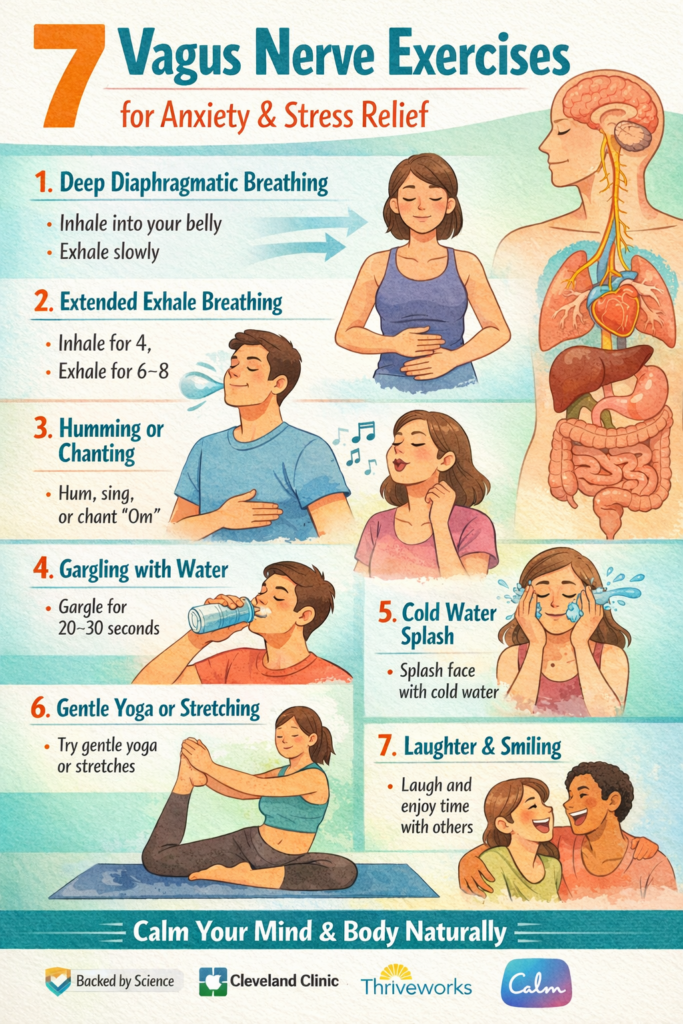
Here are 7 practical exercises to stimulate the vagus nerve and help reduce stress and anxiety:
1. Deep Diaphragmatic Breathing
Deep diaphragmatic breathing activates the parasympathetic nervous system, helping the body relax and reduce anxiety.
How to do it:
- Sit or lie down comfortably
- Inhale deeply through your nose, letting your belly expand
- Exhale slowly through your mouth
- Repeat for 5–10 minutes
2. Extended Exhale Breathing
Lengthening your exhale relative to your inhale to strengthen the “vagal brake,” which helps calm the nervous system and reduce stress.
How to do it:
- Inhale for 4 seconds
- Exhale for 6–8 seconds
- Repeat several times
3. Humming, Singing, or Chanting
Vocal vibration stimulates the vagus nerve via the vocal cords, lowering stress levels and promoting relaxation.
How to do it:
- Hum for 1–2 minutes or sing a simple tune
- Chant “Om” or another calming mantra
- Focus on slow, sustained vibrations
4. Gargling Exercise
Gargling engages throat muscles connected to the vagus nerve, offering a simple at-home method to relieve stress.
How to do it:
- Gargle water for 20–30 seconds
- Repeat a few times daily
5. Cold Water Stimulation
Cold exposure triggers the diving reflex, which activates the vagus nerve, slows heart rate, and reduces stress.
How to do it:
- Splash your face with cold water or take a brief cold shower
- Hold your breath slightly while exposing the face and neck to cold
6. Gentle Movement or Yoga
Mindful movement combined with deep breathing enhances vagal tone and improves emotional resilience.
How to do it:
- Perform slow stretches, yoga poses, or mindful walking
- Focus on coordinating breathing with movement
7. Laughter and Positive Emotions
Engaging in laughter and cultivating positive emotions indirectly stimulate the vagus nerve, helping reduce stress hormones and improve mood.
How to do it:
- Watch a funny video or spend time with friends
- Practice gratitude or mindful appreciation
Tips for Maximizing Vagus Nerve Activation
- Practice exercises consistently, 5–10 minutes daily
- Combine techniques, like breathing with humming or gentle movement, for enhanced effects
Support your nervous system with adequate sleep, hydration, and balanced nutrition, as recommended by the Cleveland Clinic.
Safety and When to Seek Help
- These exercises are generally safe for most adults
- Individuals with heart conditions, severe anxiety, or other medical issues should consult a doctor before attempting intensive techniques
- While effective for stress relief, these exercises complement but do not replace therapy or medication.
Conclusion
Stimulating the vagus nerve through breathing, vocal exercises, cold exposure, gentle movement, and positive emotions offers a research-backed, accessible way to reduce anxiety and stress.
Begin with one or two exercises today and gradually build a daily routine. Over time, consistent vagus nerve activation can help your nervous system remain balanced and resilient.
References
- MDPI – The Effects of Vagus Nerve Stimulation on Stress and Anxiety – https://www.mdpi.com/2076-3417/15/16/9105
- PubMed – A Pilot Study of Vagus Nerve Stimulation for Treatment-Resistant Anxiety Disorders – https://pubmed.ncbi.nlm.nih.gov/20633378
- PubMed – Transcutaneous Auricular Vagus Nerve Stimulation for Anxiety and Stress Reduction: RCT – https://pubmed.ncbi.nlm.nih.gov/38489208
- Calm – Feeling Anxious? These 10 Vagus Nerve “Resets” May Help – https://www.calm.com/blog/vagus-nerve-reset-for-anxiety
- Cleveland Clinic – Fight Anxiety With a Strong Vagus Nerve – https://health.clevelandclinic.org/what-does-the-vagus-nerve-do/
- Cleveland Clinic – How To Reset Your Vagus Nerve Naturally – https://health.clevelandclinic.org/vagus-nerve-reset
- Thriveworks – 12 Science-Backed Vagus Nerve Exercises for Anxiety Relief – https://thriveworks.com/help-with/anxiety/vagus-nerve-exercises/
- Parsley Health – How to Strengthen Your Vagal Tone and Calm Anxiety Naturally – https://www.parsleyhealth.com/blog/gut-brain-connection
- Inner Summits – How to Reset Your Vagus Nerve for Anxiety Relief and Stress Management – https://innersummits.ca/how-to-reset-the-vagus-nerve/