


Table of Contents
Life today is filled with constant noise and distractions, making the idea of sitting down to meditate seem unrealistic. What if you could find calm, clarity, and presence while simply taking a walk? Taking a walk could help you feel more centered and aware without any special equipment—just you, your steps, and a slightly calmer world around you. To truly harness the power of this practice, try walking meditation. Let’s explore how to do it with a simple step-by-step guide.
What Is Walking Meditation?
Walking meditation is a form of mindfulness practice where you bring full attention to the experience of walking. Rooted in ancient traditions like Buddhism and Taoism, it’s a way to unite body and mind through slow, intentional movement.
Unlike a casual stroll, walking meditation involves focusing on your breath, your steps, and your physical sensations with deliberate awareness. Whether practiced indoors in a straight line or outdoors in nature, the core intention is the same: to stay fully present in each step.
As highlighted by the Cleveland Clinic, walking meditation combines movement with breath awareness to reduce anxiety and promote mental clarity. Mindful.org describes it as a practice of “bringing awareness to the act of walking itself, one step at a time.”
The Proven Benefits of Walking Meditation
From traditional wisdom to modern science, walking meditation is gaining widespread recognition for its positive effects on mental, emotional, and physical well-being.
1. Reduces Stress and Anxiety
According to Healthline, walking meditation activates the parasympathetic nervous system, helping you shift out of stress mode. Just a few mindful steps can calm your mind and body.
2. Improves Mood and Sleep
Studies show that mindful movement—like walking meditation—can lift your mood and improve sleep quality, especially when practiced outdoors or during sunset.
3. Boosts Mental Clarity
Verywell Mind notes that mindful walking can improve focus, increase awareness, and offer mental space for decision-making.
4. Deepens the Mind-Body Connection
iResearchNet emphasizes that walking meditation enhances physical awareness, promoting emotional regulation and holistic self-care.
5. Encourages Physical Activity
This practice also supports cardiovascular health and encourages gentle movement for people who struggle with sedentary habits.
How to Practice Walking Meditation: A Step-by-Step Guide
- 1. Find Your Space : Choose a quiet place—indoors or outdoors—where you can walk slowly without interruptions.
- 2. Stand Still and Center Yourself: Begin by standing still. Feel your feet on the ground. Take a few deep breaths to bring yourself into the moment.
- 3. Walk Slowly and Intentionally: Take a step with full awareness. Feel your foot lift, move through space, and connect with the earth.
- 4. Focus on the Sensations: Notice the rhythm of your walking, the movement of your legs, the sway of your arms, and the feel of your breath.
- 5. Return When Distracted: If your mind wanders (and it will), gently bring your attention back to your steps or breath. No judgment—just return.
Guided Walking Meditations and Resources
If you’re new to the practice, a guided meditation can be a great starting point:
- Mindful.org offers a free 12-minute audio guide designed for daily practice.
- Apps like Insight Timer and Calm include walking meditation sessions.
You can also create your own routine by setting a timer for 5–15 minutes and using a mantra or breath count as your anchor.
Make your daily walks more mindful
You don’t need a formal ritual to practice walking meditation. Everyday moments can offer opportunities for mindfulness:
- Walking to your car
- Strolling through the grocery store
- Waiting in line or at the airport
PositivePsychology.com emphasizes that integrating sensory awareness into routine walks can shift your mindset and relieve accumulated tension.
Walking Meditation vs. Mindful Walking: What’s the Difference?
While the terms are often used interchangeably, there are subtle distinctions:
- Walking Meditation is a structured, formal practice, often done slowly and in silence.
- Mindful Walking is more informal and can be practiced anywhere, at any pace.
Both foster presence, reduce stress, and bring your attention back to your body. The best practice? The one you’ll actually do.
Nature, Movement & Mental Wellness
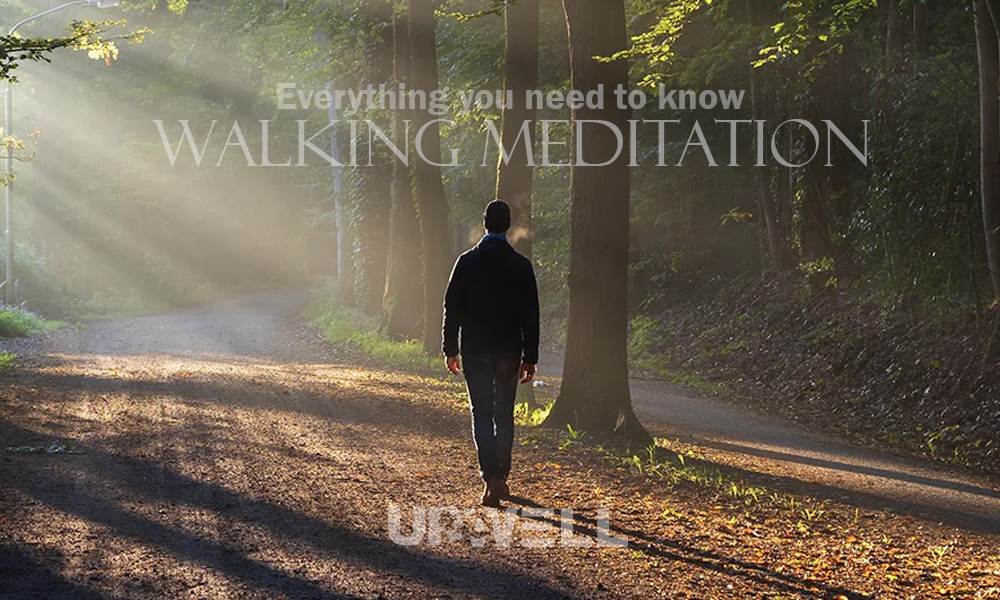
Walking in natural environments has added benefits. The Japanese practice of shinrin-yoku, or “forest bathing,” aligns perfectly with walking meditation. According to PositivePsychology.com, being immersed in nature amplifies the calming effects of mindfulness. Sensory details—like rustling leaves, birdsong, or the feeling of sunlight—enhance your awareness and soothe your nervous system.
Common Challenges (And How to Overcome Them)
“My mind keeps wandering.”
That’s okay. The point isn’t to eliminate thoughts but to notice them and return to the present.
“I feel awkward or self-conscious.”
Start alone in a safe space. Over time, the practice becomes more natural.
“I don’t have time.”
Even 5 minutes of mindful walking can shift your energy and outlook.
References:
- Cleveland Clinic. (2024). Put Intention Behind Your Walking Meditation
- Mindful.org. (2023). A Guided Walking Meditation for Daily Life
- Healthline. (2024). The Benefits of Meditation Walks
- PositivePsychology.com. (2020). Mindful Walking & Walking Meditation: A Restorative Practice
- Verywell Mind. (2024). The Benefits of Walking Meditation and How to Get Started
- iResearchNet. (2025). Walking Meditation: Connecting Movement and Mindfulness